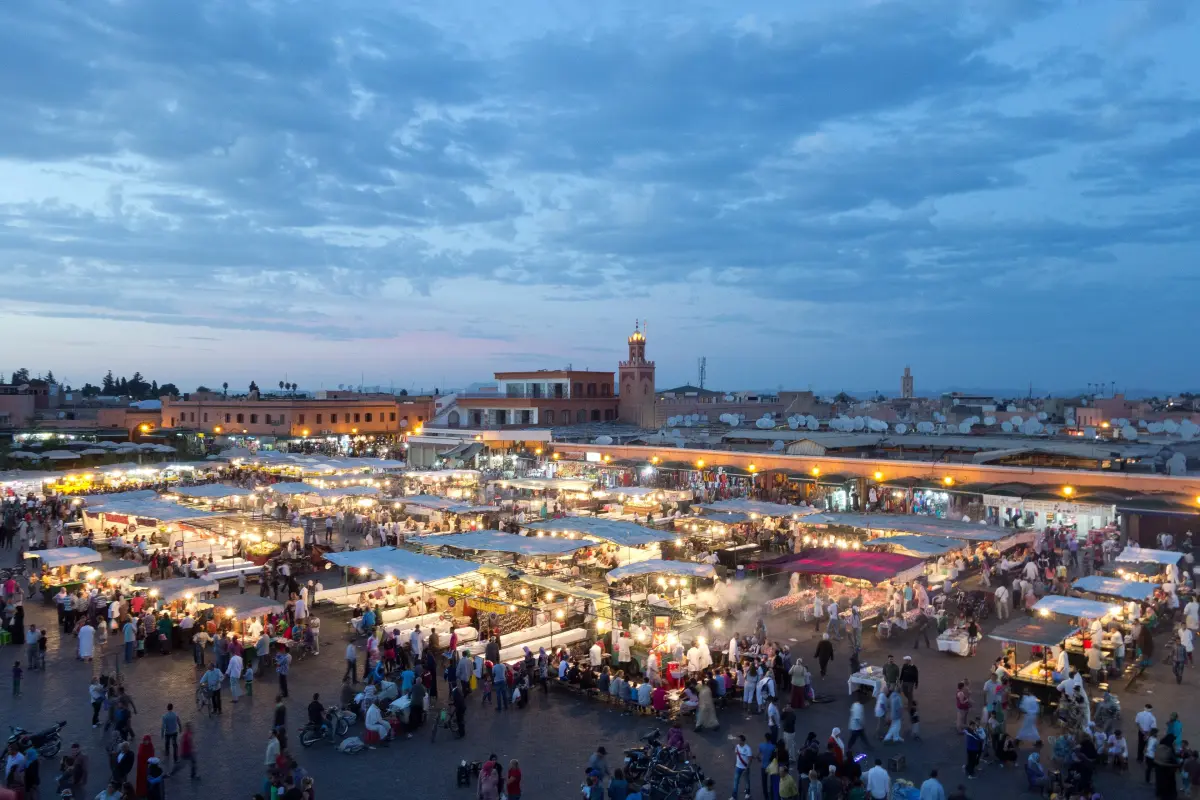
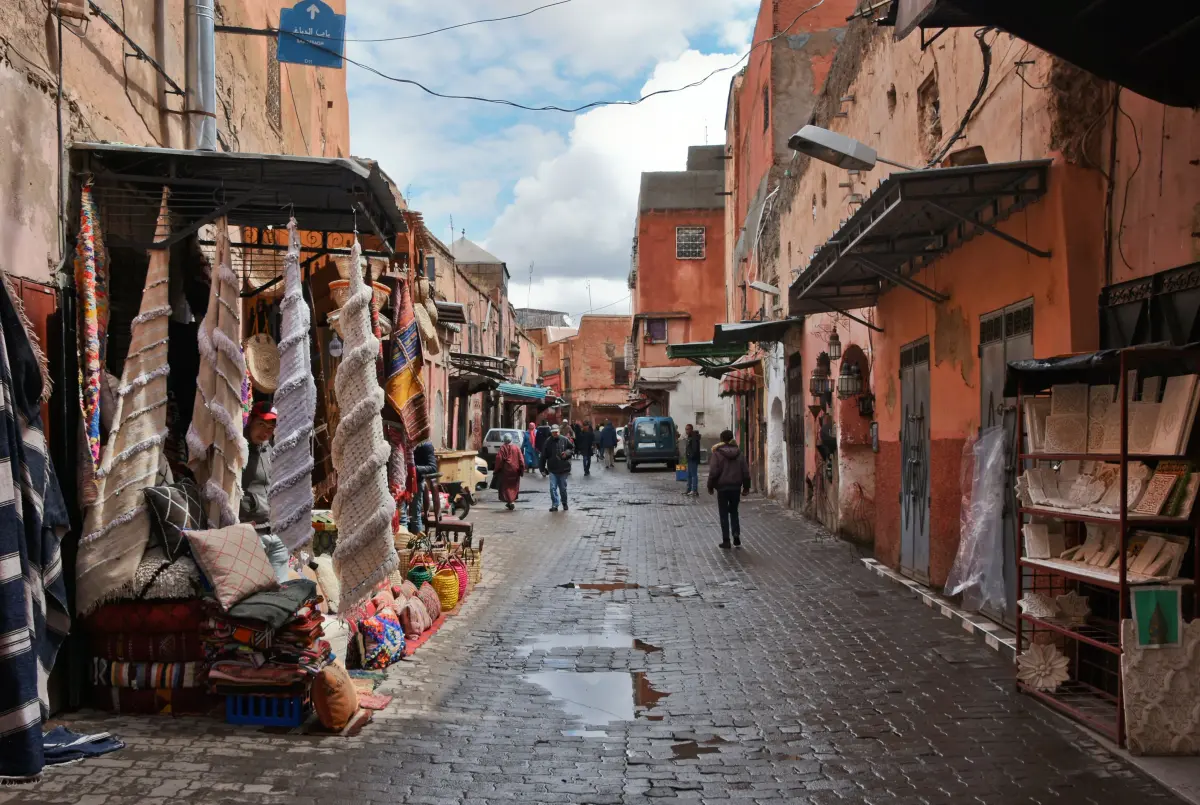
The first time you walk into the Marrakech medina, it can feel like everything is happening at once. Shopkeepers call out from their stalls, motorbikes squeeze through narrow lanes, and the smell of grilled food gives way to leather, spices, and freshly cut wood.
It is easy to spend an entire morning here without following a plan. But a little preparation makes the experience much more enjoyable, especially if you want to explore the souks without constantly checking your phone or wondering whether you are paying a fair price.
This guide explains how to navigate the Marrakech medina, which souks to visit, what to buy, how bargaining works, and what to know before setting out.
If you are still planning the rest of your trip, start with our Things to Do in Marrakech guide.
Marrakech Medina & Souks at a Glance
| Detail | What to know |
|---|---|
| Best time to visit | Morning, when many shops are open and the lanes are generally less crowded |
| Time to allow | 2–3 hours for a first visit; longer if you plan to shop |
| Entry fee | Free to explore the public streets and souks |
| Payment | Carry Moroccan dirhams in cash; some larger shops accept cards |
| Getting around | Mainly on foot, with occasional motorbikes and delivery vehicles in the lanes |
| Main starting point | Jemaa el-Fnaa |
A useful distinction: The medina is Marrakech’s historic old city. The souks are its traditional market areas. You can explore the medina without shopping, and you can visit the souks as part of a wider walk through the old city.
How to Navigate the Marrakech Medina
The medina is not laid out like a modern city. Streets twist, split into smaller lanes, and sometimes end at a doorway or a residential courtyard. A route that looks short on a map can take longer than expected.
You do not need to memorize every turn. Instead, start with a few simple habits.
Save your accommodation before leaving
Pin your riad or hotel on your map and download an offline map of Marrakech. This is particularly useful if your mobile connection becomes unreliable in narrow streets.
Save the nearest accessible square or main road as well. If a taxi cannot reach your riad, that landmark may be a more useful meeting point than the accommodation’s exact address.
Use landmarks, but do not rely on them alone
Jemaa el-Fnaa is a convenient reference point in the southern part of the central souks. The Koutoubia minaret can also help you orient yourself when it is visible.
However, you cannot see the minaret from every alley. Keep your offline map available rather than assuming that following a landmark will always lead you directly back.
Ask for directions when you need them
If you are unsure where to go, ask at an established shop, café, or your accommodation. A simple question such as “Which way to Jemaa el-Fnaa?” is often more useful than trying to follow a complicated route through several small lanes.
You may also encounter people who offer to guide you without being asked. If you do not want their help, politely decline and continue walking.
For more advice on unwanted guiding and other common situations, read our Marrakech Tourist Scams & Safety Guide.
A Self-Guided Walking Route Through the Souks
If this is your first visit, begin near Jemaa el-Fnaa and explore the central souks before heading toward the northern part of the medina.
This is a flexible route, not a turn-by-turn itinerary. Small streets can be confusing, and part of the experience is stopping wherever something catches your interest.
Suggested route · Allow 2–3 hours
- Jemaa el-Fnaa: Start at the square and enter the market streets to its north.
- Souk Semmarine: Browse textiles, souvenirs, ceramics, and other goods along one of the main shopping routes.
- Smaller craft souks: Explore nearby lanes with leather goods, metalwork, lamps, and artisan workshops.
- Ben Youssef area: Continue toward the northern medina if you want to combine shopping with a visit to Ben Youssef Madrasa.
- Return or take a break: Head back toward the central souks, or stop at a café before continuing your sightseeing.
Do not try to visit every market in one continuous walk. If you find a workshop or a small shop that interests you, allow yourself time to stop.
Which Marrakech Souks Should You Visit?
The souks are often associated with particular crafts or products, although today you will find a mix of traditional workshops, souvenir stalls, and modern retail shops across the market area.
Souk Semmarine: A Good Place to Start
Souk Semmarine is one of the main shopping streets leading into the central market area from Jemaa el-Fnaa.
It is a useful starting point because you can browse a wide variety of products without committing to a particular purchase. Expect clothing, textiles, ceramics, decorative objects, and souvenirs.
If you see something you like, take note of its size, material, and price. You may find similar products elsewhere, which makes it easier to compare before buying.
Souk Cherratine: Leather Goods
If you are interested in leather goods, look for the leather-working areas and shops selling babouches, bags, belts, and poufs.
Pay attention to the stitching, lining, and finish. Two products that look similar from a distance may differ considerably in material and workmanship.
For babouches, try them on if possible. For a leather pouf, ask whether the price includes the filling, as many are sold unstuffed.
Souk Haddadine: Metalwork and Workshops
The metalworking areas offer a chance to see artisans working with tools and traditional techniques.
You may come across decorative lamps, ironwork, and other metal objects, although not every product sold nearby is necessarily made in the workshop where you see it displayed.
If you are buying a lantern, check its dimensions and weight. Large metal items may be difficult to pack safely for a flight.
Spice and Herbal Shops
Spice shops are easy to spot thanks to their colorful displays of cumin, paprika, turmeric, ras el hanout, and dried herbs.
Rather than choosing a shop based only on its display, ask about the product’s origin, packaging, and price by weight.
If you want to buy saffron or argan oil, take extra care with quality claims. A high price or an elaborate presentation does not, by itself, prove authenticity.
What to Buy in the Marrakech Souks
The best souvenir is one you genuinely want to use or keep. Before buying, consider whether the item is practical to carry home and whether you can judge its quality.
| Product | What to check before buying |
|---|---|
| Babouches | Fit, stitching, sole, and material |
| Leather bags and poufs | Leather quality, seams, lining, and whether a pouf includes filling |
| Ceramics | Cracks, chips, weight, and whether the item is suitable for food use |
| Lanterns | Size, metal finish, sharp edges, and safe packing |
| Spices | Price by weight, freshness, packaging, and product identification |
| Carpets | Dimensions, material, condition, and the seller’s description of how it was made |
| Argan oil | Intended use, ingredients, packaging, and credible product information |
If you are buying something expensive, do not feel pressured to decide immediately. Compare several options and make sure you understand exactly what you are paying for.
How to Bargain in the Marrakech Souks
Bargaining is common in many traditional souk shops, but not every business negotiates prices. Some boutiques display fixed prices, and that is perfectly normal.
There is also no universal rule that tells you what percentage of the first asking price you should pay. The price of a handmade item depends on its materials, workmanship, size, and the individual seller.
A better approach is to compare products and negotiate respectfully.
1. Ask for the price and examine the item Before discussing a discount, check what you are buying. Is the bag lined? Is the pouf filled? Is the carpet handmade or machine-produced? Make sure you and the seller are talking about the same product and quantity.
2. Make an offer you would genuinely be happy to pay If the asking price is higher than your budget, suggest a lower amount politely. You do not need to start with an extremely low offer or follow a fixed percentage. A simple “Would you accept 200 dirhams?” is enough.
3. Be prepared to leave without buying If you cannot agree on a price, thank the seller and continue browsing. You may find a different item that better suits your budget. Walking away does not prove that your offer was too low or that the seller was overcharging. Sometimes the two of you simply have different expectations.
4. Confirm the final price Before paying, confirm the total amount, the currency, and what is included. This is especially important if you are buying several items or arranging delivery.
A note about mint tea: Some shopkeepers may offer you tea while you browse. Accepting it does not oblige you to buy anything.
How Much Do Things Cost in the Marrakech Souks?
Prices vary too much to give one reliable “correct price” for every souvenir. A simple pair of babouches and a carefully made leather pair, for example, should not be treated as identical products.
For a useful comparison, record the asking prices of similar items in two or three shops. Check their materials and dimensions before deciding whether one is better value.
Note on pricing guides: Prices fluctuate based on quality, season, and negotiation. Always view published price guides as rough indications rather than guaranteed rates.
Practical Tips Before You Go
Carry some cash and small notes
Many smaller shops prefer cash in Moroccan dirhams, although some larger businesses accept cards. Carry smaller notes for modest purchases, but do not assume a seller is trying to pressure you into buying more simply because they cannot change a large bill.
Watch for motorbikes and delivery vehicles
Some medina lanes are shared by pedestrians, motorbikes, bicycles, and delivery vehicles. Stay aware of what is approaching behind you, particularly in narrow passages. You may hear someone call “Balak!”—a warning to pay attention or move aside. Look around and make room where it is safe to do so.
Ask before taking photographs
The markets are photogenic, but shopkeepers and craftspeople are not simply part of the scenery. Ask permission before taking a close-up photograph of someone or their workspace. If a person expects payment for a photograph, agree on the amount beforehand or politely decline.
Check opening times around Friday prayers and holidays
Individual shops set their own hours. Some close temporarily for Friday prayers, while others remain open. Opening patterns may also change during Ramadan, religious holidays, or quieter trading periods. If there is a particular workshop you want to visit, confirm its hours directly.
Wear comfortable shoes
You will likely spend several hours walking over uneven paving and through crowded lanes. Comfortable, closed-toe shoes are more useful than footwear chosen only for photographs. Carry drinking water, especially in warmer months, and take a break when you need one.
Do You Need a Guide for the Marrakech Souks?
You can explore the souks independently, particularly if you are comfortable walking and using an offline map.
A licensed local guide can be useful if you want to learn about the history of the medina, understand traditional crafts, or follow a more structured route.
Before booking, ask how long the tour lasts, what it covers, and whether shopping stops are included. If you prefer a sightseeing tour without visits to retail shops, make that clear in advance.
Frequently Asked Questions
Are the Marrakech souks free to visit? Yes. You can walk through the public souk streets without paying an entrance fee. Individual museums, historical attractions, and organized tours may charge admission.
What is the best time to visit the Marrakech souks? Morning is a good option if you prefer to browse before the busiest periods. Shop opening hours vary, so do not expect every stall to be open at the same time.
Are the Marrakech souks open on Fridays? Many shops open on Fridays, but some close temporarily for prayers. Exact hours depend on the individual business.
Can you pay by credit card in the souks? Some larger shops and boutiques accept cards, but cash remains useful for smaller purchases. Ask about payment methods before agreeing to buy an item.
Is it easy to get lost in the Marrakech medina? The narrow streets can be confusing, especially on a first visit. Save your accommodation and nearby landmarks on an offline map, and ask for directions at a shop or café when necessary.
Is bargaining expected in every shop? No. Negotiation is common in many traditional market stalls, but some businesses have fixed prices. Respect the seller’s pricing approach and decide whether the item suits your budget.
How long should you spend in the Marrakech souks? Allow two to three hours for an introductory walk. If you enjoy shopping, photography, or visiting workshops, you may want to spend half a day or return on another morning.
Final Thoughts
The Marrakech medina is easier to enjoy when you give yourself time to explore rather than trying to follow a perfect route. Start near Jemaa el-Fnaa, wander through the central souks, stop at workshops that interest you, and take breaks whenever you need them.
You do not have to buy anything to appreciate the markets. The architecture, craftsmanship, everyday activity, and small discoveries along the way are a large part of the experience.
And if you do decide to shop, compare products, ask questions, agree on a price you are comfortable with, and leave room in your bag for whatever catches your eye.