Chefchaouen Travel Guide: Planning & Practical Tips
Spend one or two nights in Chefchaouen, visit in spring (April–May) or autumn (September–October), and arrive by road: there is no train or airport. The CTM bus takes about 4 hours from Fes and about 2.5 hours from Tangier. Carry cash, wear good shoes for the steep alleys, and ask before photographing people or doorways.
Chefchaouen, the “Blue Pearl” of the Rif Mountains, is calmer than Marrakech or Fes, but it is a real mountain town with steep streets, cash-only cafés and its own etiquette. This page is about planning: when to go, how long to stay, how to get there, what it costs and how to behave. For the sights, see our things to do in Chefchaouen guide.
Chefchaouen at a Glance
| Best for | Photography, a slower pace, hiking, local textiles |
| Recommended stay | 1–2 nights |
| Best time to visit | April–May and September–October |
| Getting there | By road only. About 4 hours from Fes, about 2.5 hours from Tangier |
| Money | Cash. Most cafés, small shops and photo spots do not take cards |
| Languages | Darija and Arabic; Spanish is the most common foreign language, often ahead of French |
| Accessibility | Poor. Steep hills, uneven cobblestones and many stairs |
When to Visit Chefchaouen
| Season | Conditions |
|---|---|
| Spring (March–May) | Ideal. Pleasant temperatures for walking and hiking, green landscapes. |
| Summer (June–August) | Hot and crowded. Moroccan families and international visitors escape the inland heat to the mountains. |
| Autumn (September–November) | Excellent. Mild weather and soft light for photography. |
| Winter (December–February) | Cold and wet. Many riads have no central heating and the nights are freezing; pack warm layers and ask about heating before booking. |
Time of day matters more than the season. Day-trip buses from Fes and Tangier arrive mid-morning. Walk the alleys before 8:30 AM or after 5 PM and you will have them almost to yourself.
How Many Days in Chefchaouen?
- Day trip: possible from Fes, but you spend several hours on the road each way and arrive during the most crowded hours. Not recommended if you can avoid it.
- 1 night (about 36 hours): enough to see the medina, the Kasbah, Plaza Uta el-Hammam and the sunset from the Spanish Mosque.
- 2 nights (ideal): add the Akchour waterfalls in Talassemtane National Park, about 45 minutes away by taxi.
- 3 nights or more: only if you plan serious hiking in the Rif.
How to Get to Chefchaouen
Chefchaouen has no airport and no train station. Everyone arrives by road.
| From | Time | Options |
|---|---|---|
| Fes | About 4 hours by bus, about 3 hours by shared grand taxi | CTM bus (roughly 80–140 MAD), shared grand taxi (about 80–100 MAD per seat), private transfer (800–1,400+ MAD per vehicle) |
| Tangier | About 2.5 hours | CTM bus (roughly 70 MAD plus a small luggage fee), shared grand taxi (about 70 MAD per seat, or 400–500 MAD for the whole car). Tangier is the most common entry point from the north. |
- Book CTM tickets on ctm.ma; the site accepts international cards. Large bags cost a small extra fee (about 5 MAD per bag) at the baggage counter.
- The roads are paved but very winding in the Rif. If you get motion sickness, take medication before leaving and sit near the front.
- On arrival: the bus station is at the bottom of the hill, about 15 minutes’ steep walk from the medina. Blue petit taxis wait outside and charge about 15–20 MAD to take you and your bags up to the gates.
Full comparison of bus, taxi and transfer: Fes to Chefchaouen guide.
Where to Stay: The Short Version
The right area depends on your luggage and your knees:
- Deep in the medina: the best atmosphere, but taxis cannot enter; you carry bags (or hire a porter) up stairs and slopes.
- Near Bab El Ain or Ras El Maa: the best compromise. A taxi drops you within a few minutes’ walk of the door.
- Outside or above the medina: views, quiet nights and car access, but an uphill walk back every evening.
Neighbourhoods, trade-offs and how to choose: where to stay in Chefchaouen.
How Much Does Chefchaouen Cost?
Food prices around the main square are close to Marrakech; step one street away and they drop. Prices are indicative (November 2026).
| Item | Typical price |
|---|---|
| Local café meal, bissara, sandwiches | 20–50 MAD per person |
| Tourist restaurant or rooftop tagine | 80–160 MAD per person |
| Premium riad dining | 200–350+ MAD per person |
| Kasbah museum and garden | About 60 MAD for foreigners, cash only |
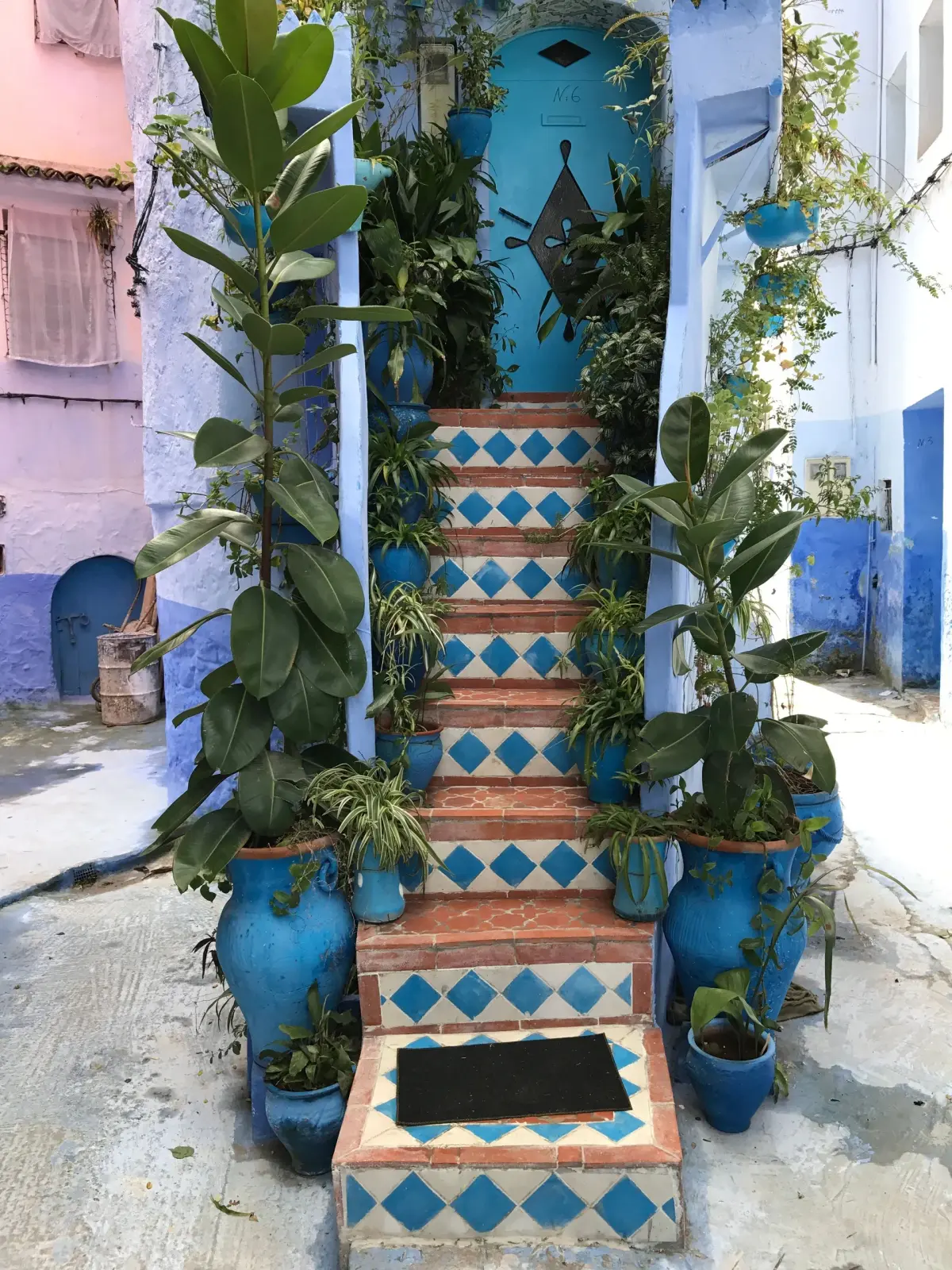
| Decorated “photo spot” staircases and patios | 5–10 MAD |
| Petit taxi from the bus station to the medina | 15–20 MAD |
| CTM bus from Fes | Roughly 80–140 MAD |
Cash and ATMs
Larger hotels and expensive restaurants take cards, but most cafés, small shops and photo spots are cash only. Arrive with dirhams; withdrawing in Fes or Tangier before you travel is the safest option.
What to See: The Short List
Chefchaouen is small and made for wandering. The essentials:
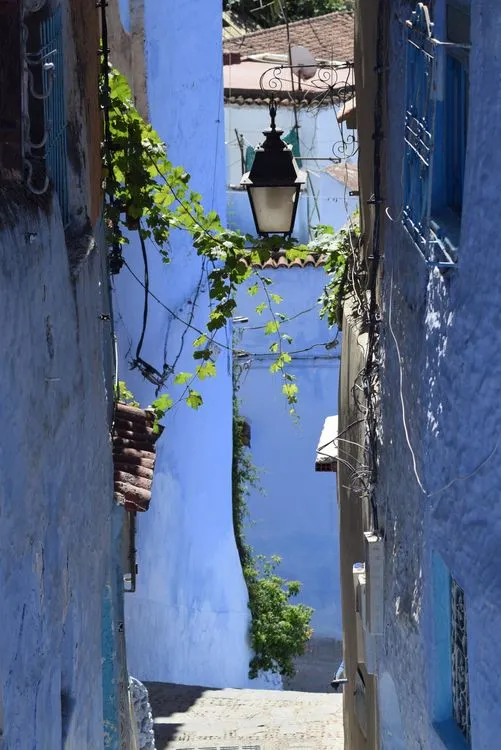
- The blue streets of the medina, best before 8:30 AM.
- Plaza Uta el-Hammam, the main square, for mint tea and people-watching.
- The Kasbah, a 15th-century fortress with a small museum and garden (about 60 MAD).
- Ras El Maa, the spring just outside the eastern walls.
- The Spanish Mosque, a 30-minute walk up the opposite hill for the classic view at sunset.
- Akchour waterfalls, about 45 minutes away, for a half-day or full-day hike. See our Akchour waterfalls guide.
All 15 sights with prices and tips: things to do in Chefchaouen. Why the town is painted blue, and whether it lives up to the photos: Chefchaouen, the Blue City.
What to Expect: The Vibe and the Hustle
The atmosphere is noticeably more relaxed than in Marrakech or Fes. Shopkeepers are less pushy and the mountain air slows everything down. The friction you will meet is small: some sales pressure, getting lost, and offers of cannabis.
Is Chefchaouen safe?
Yes. Violent crime against tourists is extremely rare, and you can walk around the main medina areas comfortably in the evening. Normal travel precautions apply; the main annoyances are petty hustle and navigation.
The cannabis question
The Rif is a major cannabis-growing region (kif), and you may be offered some in tourist areas. A short, polite “la, shukran” (no, thank you) and walking on is the simplest answer. Whatever informal tolerance you may see, recreational cannabis is illegal in Morocco, and buying it carries real legal risk for tourists.
Tap water
The town’s water comes from mountain springs, but if you have a sensitive stomach, drink bottled water.
Ethical Photography in the Blue City
This is the most important section of this guide. The medina is not a museum; it is a residential neighbourhood where families live and work.
- Do not photograph open doors. If a door is open, someone is home. Do not point your camera into their private space.
- Ask before photographing people, and accept a refusal.
- Do not block the alleys. The narrow streets are how residents get home; keep long photo shoots out of their way.
- Pay for the “photo spots”. Some residents decorate their patios or staircases for visitors and ask 5–10 MAD to pose there. It is a fair exchange that supports the people whose homes are the attraction.
- Go early. Before 8:30 AM the light is soft, the streets are empty, and you disturb fewer people.
Accessibility and Physical Demands
Chefchaouen is built on a mountainside. Almost every alley climbs on uneven cobblestones or stone stairs. With mobility problems, bad knees, a pushchair or a wheelchair, the medina is very hard to get around. In that case, choose accommodation near a gate that taxis can reach, and plan short walks from there.
Frequently Asked Questions
Is Chefchaouen worth visiting?
Yes. It is genuinely beautiful and much calmer than the imperial cities. Because it is isolated in the Rif, it fits best into a route that already passes through Fes or Tangier.
How many days do you need in Chefchaouen?
One to two nights. About 36 hours is enough for the medina, the Kasbah and the Spanish Mosque at sunset; a second night lets you hike to the Akchour waterfalls.
How do you get to Chefchaouen?
By road only: there is no train or airport. From Fes, the CTM bus takes about 4 hours (roughly 80–140 MAD) and a shared grand taxi about 3 hours (80–100 MAD per seat). From Tangier, the drive is about 2.5 hours.
Is Chefchaouen safe for tourists?
Yes. Violent crime against tourists is extremely rare and the medina is comfortable to walk in the evening. Expect occasional sales pressure and offers of cannabis, which is illegal in Morocco; a polite refusal is enough.
Do I need cash in Chefchaouen?
Yes. Large hotels and expensive restaurants accept cards, but most cafés, small shops and photo spots are cash only. Bring dirhams with you.
Do they speak English in Chefchaouen?
In hotels, riads and tourist restaurants, yes. Because of the Spanish protectorate period, Spanish is the most widely spoken foreign language in town, often more than French.