Aït Benhaddou UNESCO Guide: Complete Visitor’s Guide to Morocco’s Iconic Kasbah
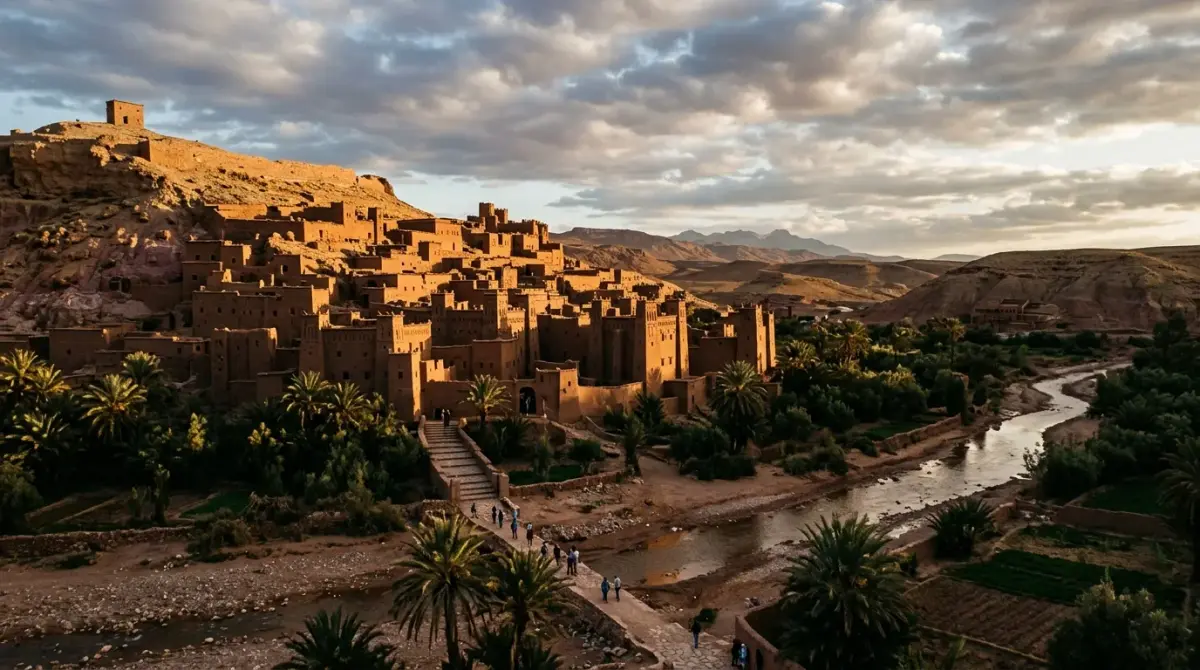
Perched on a hillside overlooking the palm-lined Ounila River valley, Aït Benhaddou stands as one of Morocco’s most photogenic and historically significant destinations. This ancient fortified village—officially recognized as a UNESCO World Heritage Site—represents a masterpiece of traditional southern Moroccan architecture.
While it is frequently marketed as an attraction within Ouarzazate, Aït Benhaddou actually sits roughly 30 kilometers northwest of the city. Understanding this geographical distinction is crucial for planning your route, whether you are arriving from Marrakech or using Ouarzazate as a base.
This guide covers exactly what you need to know to visit Aït Benhaddou practically: how to get there, what to look for inside the walls, and why planning your timing carefully matters.
What Is Aït Benhaddou?
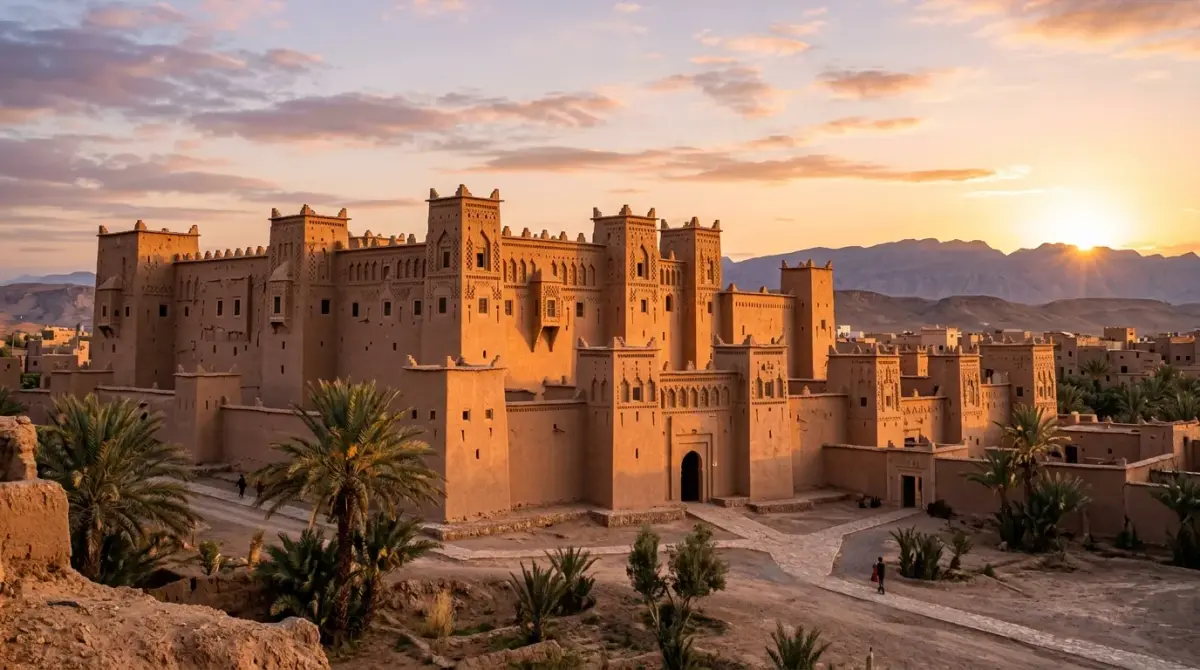
Aït Benhaddou is a ksar (a fortified village consisting of multiple kasbahs) built entirely from earthen clay and straw. The name combines the Berber word “Aït” (meaning “people of”) with “Benhaddou,” referring to the ancient local family that once controlled the area.
Historical Significance
The settlement was established centuries ago as a critical waypoint along the trans-Saharan trade routes. Caravans traveling between the Sahara Desert and Marrakech would stop here to rest and trade salt, gold, and spices before crossing the grueling Tizi n’Tichka pass through the High Atlas Mountains.
The ksar’s strategic location provided natural defense, while its high walls allowed residents to monitor passing caravans. Wealthy merchant families constructed increasingly elaborate earthen residences within the walls, creating the complex, multi-layered structure visible today.
UNESCO World Heritage Status
In 1987, Aït Benhaddou was designated a UNESCO World Heritage Site, recognized as an outstanding example of pre-Saharan adobe architecture.
Today, while the vast majority of the population has moved to the modern village across the river, a handful of families still inhabit the historic ksar. You are not just visiting a museum, but exploring an actively maintained piece of living heritage.
The Architecture: Understanding the Design
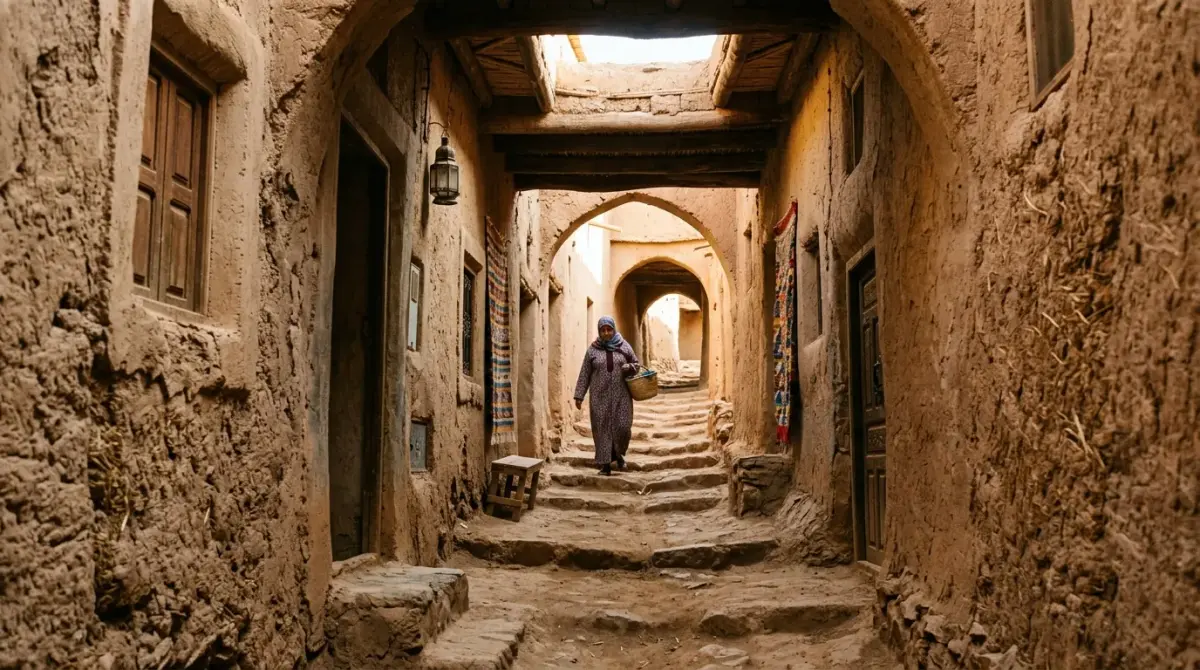
Aït Benhaddou’s architecture reflects centuries of Moroccan building traditions specifically adapted to the harsh pre-Saharan climate:
Mud-Brick Construction
- Walls are built from rammed earth, clay, and straw, then dried in the sun.
- This traditional material provides excellent natural insulation against extreme heat and cold.
- It requires constant, periodic maintenance. You will often see visible repairs where replastering has recently taken place.
Fortified Design
- Thick outer walls were designed for defense against tribal raids.
- Narrow, winding internal streets create permanent shade and channel natural cooling breezes.
- Multiple building levels are stacked against the hillside, creating a labyrinthine layout.
Carved Details
- Look closely at the upper levels to see intricate carved wooden doors and window frames.
- Decorative geometric patterns pressed into the clay facades indicate the wealth and status of the former residents.
What to See & Do at Aït Benhaddou
The Walking Route
Starting at the River Begin at the modern village edge. You will cross the Ounila River (either via the modern bridge or by stepping stones if the water level is low) to reach the main entrance of the ksar.
Exploring the Lower Levels
- Wander through the narrow passageways lined with small shops selling traditional carpets, jewelry, and art.
- Some residents charge a nominal fee (around 10 MAD) to let you look inside their restored traditional homes.
- Notice the original wooden beams supporting the ceilings in the darker, covered alleyways.
Climbing to the Summit
- Ascend the increasingly steep stairs toward the top of the hill.
- Explore restored rooms and former communal storage areas (Agadir).
- The final climb leads to the ruins of the fortified granary at the very top.
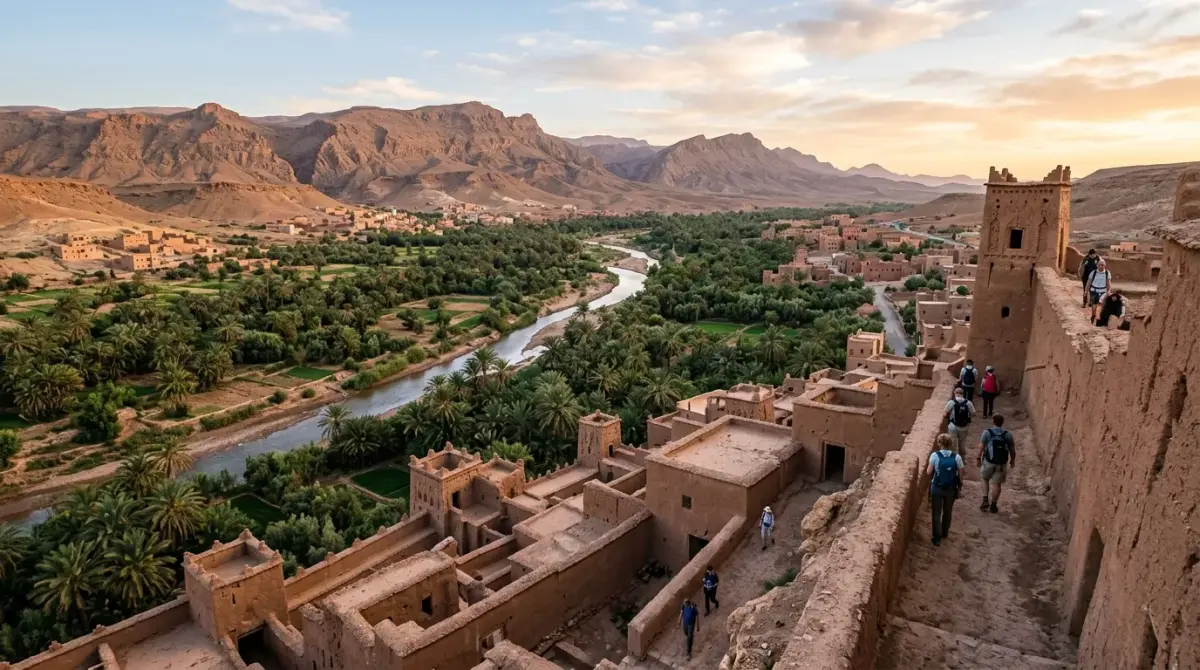
The Summit Viewpoint
- From the peak, the views extend across the palm-lined valleys, the winding river, and the surrounding barren mountains. This is the ultimate vantage point for photography.
Time Required: Allow 1.5 to 2 hours to cross the river, climb to the top, take photographs, and return.
Best Time to Visit Aït Benhaddou
Timing your visit correctly is the single most important factor for a good experience.
The Golden Rule: Avoid arriving between 11:00 AM and 3:00 PM. This is when the majority of large tour buses arriving from Marrakech converge on the site, creating bottlenecks in the narrow staircases and ruining the atmosphere.
| Time | Light | Crowds | Experience |
|---|---|---|---|
| 7:00 - 9:00 AM | Golden sunrise | Very low | ⭐⭐⭐⭐⭐ Exceptional. You will have the ksar largely to yourself. |
| 11:00 AM - 3:00 PM | Harsh, flat light | Very high | ⭐ Poor. Crowded, hot, and difficult to photograph. |
| 4:30 - 6:30 PM | Golden late afternoon | Moderate to low | ⭐⭐⭐⭐⭐ Excellent. The mud-brick walls glow bright red. |
Seasonality: Spring (March-May) and Autumn (September-November) offer the best temperatures. Summer (July-August) can easily exceed 40°C (104°F), making the steep, unshaded climb to the top physically demanding.
How to Get to Aït Benhaddou
From Ouarzazate (30 km / 40 minutes)
By Grand Taxi
- Cost: ~30-50 MAD per seat.
- How: Head to the grand taxi station in Ouarzazate. You can either wait for the taxi to fill up with 6 passengers, or negotiate to buy out the entire taxi (around 200-300 MAD) for a private ride and have the driver wait for you.
By Organized Tour / Private Transfer
- Your accommodation in Ouarzazate can arrange a private driver for a half-day excursion. This costs roughly 300-500 MAD and offers the most flexibility.
From Marrakech (190 km / 3.5 - 4 hours)
Aït Benhaddou is a standard stop for travelers driving from Marrakech toward the desert.
- The route crosses the High Atlas Mountains via the Tizi n’Tichka pass.
- While the road is fully paved, it is winding, steep, and heavily trafficked by trucks. Do not underestimate the driving time.
- If you are driving yourself, leave Marrakech early enough to cross the mountains in full daylight.
Aït Benhaddou in Film: The Hollywood Connection
Aït Benhaddou’s dramatic architecture has made it one of the most heavily utilized filming locations in North Africa.
Notable productions filmed here include:
- Game of Thrones (used as the backdrop for the city of Yunkai)
- Gladiator (the arena where Maximus fights was built at the base of the ksar)
- Kingdom of Heaven
- The Mummy
- Lawrence of Arabia
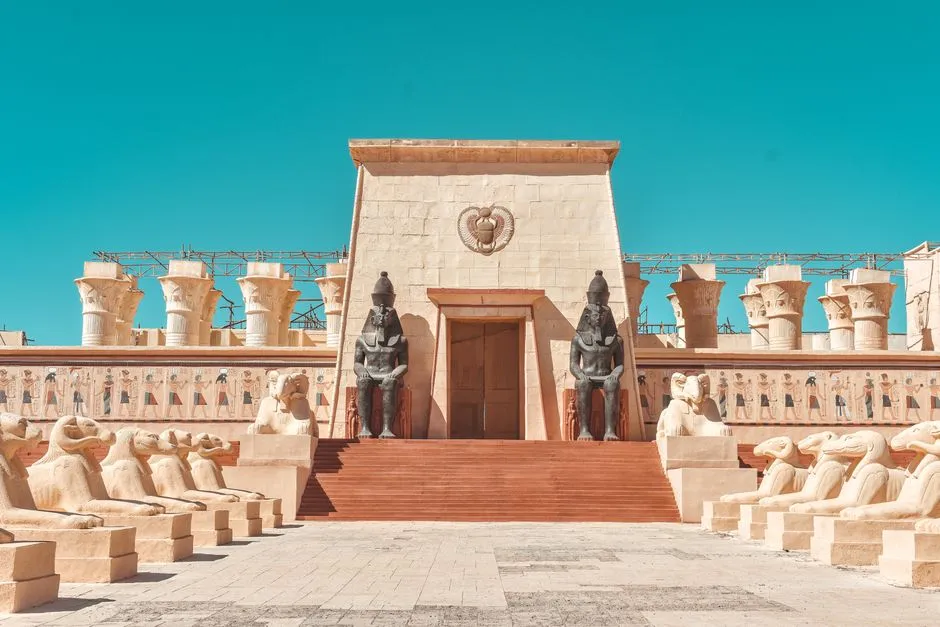
Unlike Atlas Film Studios, which contains artificial movie sets, Aït Benhaddou is a genuine historical site that happens to be used by filmmakers.
Practical Visitor Tips
- Entrance Fees: Walking through the main public streets of the ksar is completely free. However, a few specific private homes and museums inside charge a small entry fee (usually 10 MAD).
- Hiring a Guide: You do not need a guide to walk to the top. However, hiring a local certified guide (usually found near the bridge, costing 100-150 MAD) provides valuable architectural context and helps support the local economy.
- Footwear: The climbing is steep and the stone steps are uneven. Wear sturdy, grippy shoes. Leave the sandals in the car.
- Water: Bring bottled water with you before crossing the river. There is little to no shade during the climb.
FAQ
How long should I spend at Aït Benhaddou?
Budget roughly 1.5 to 2 hours. This provides enough time to walk from the modern village, cross the river, climb through the ksar to the granary at the summit, take photos, and descend without rushing.
Is it difficult to climb to the top?
The climb is moderately steep but relatively short (15-20 minutes of actual walking time upward). It is not technically difficult, but the footing is uneven and there are no handrails. Anyone with average mobility can manage it by taking their time.
Can I visit Aït Benhaddou and Ouarzazate in one day?
Yes. Many travelers stay in Ouarzazate and visit Aït Benhaddou as a morning or late-afternoon excursion. It is a 40-minute drive between the two, making a half-day trip very practical.
Do I need to pay an entrance fee?
No, there is no official ticket or entrance fee to enter the main public pathways of the UNESCO site. You only need 10 MAD if you choose to enter specific privately restored kasbahs along the route.
Summary
Aït Benhaddou is arguably the most impressive example of earthen architecture remaining in Morocco. By understanding its history as a vital trading post, respecting its physical layout, and timing your visit to avoid the midday crowds, you elevate the experience from a simple photo opportunity to a genuine highlight of your southern Moroccan itinerary.