Getting around Moroccan cities by taxi is inexpensive, convenient, and often necessary when carrying luggage or heading outside the old Medina walls. However, Morocco operates two completely distinct taxi networks: Petit Taxis and Grand Taxis.
Mixing them up is one of the most frequent missteps first-time travelers make. A Petit Taxi cannot legally take you between cities, while a Grand Taxi follows a totally different pricing structure based on shared passenger seats rather than a running meter.
Understanding the legal rules, typical fares in Moroccan Dirhams (MAD), and local etiquette will save you money and keep your transit hassle-free.
Petit Taxi vs Grand Taxi at a Glance
| Feature | Petit Taxi (Small Taxi) | Grand Taxi (Big Taxi) |
|---|---|---|
| Operating Zone | Strictly inside municipal city limits | Intercity routes, suburbs, day-trips |
| Vehicle Types | Small hatchbacks (Peugeot 208, Fiat Uno, Dacia) | Sedans & Minivans (Dacia Lodgy, Mercedes) |
| Max Passengers | Exactly 3 passengers | Up to 6 passengers |
| Payment System | Taximeter (Le Compteur) mandatory by law | Fixed route fare per seat (Blasa) |
| Ride Type | Private or shared (meter splits automatically) | Shared collective (Collectif) or private charter (Course) |
| Where to Find | Flagged down anywhere along main streets | Dedicated Grand Taxi stations (Stations de Taxi) |
1. Petit Taxis: City Travel & The Meter Rule
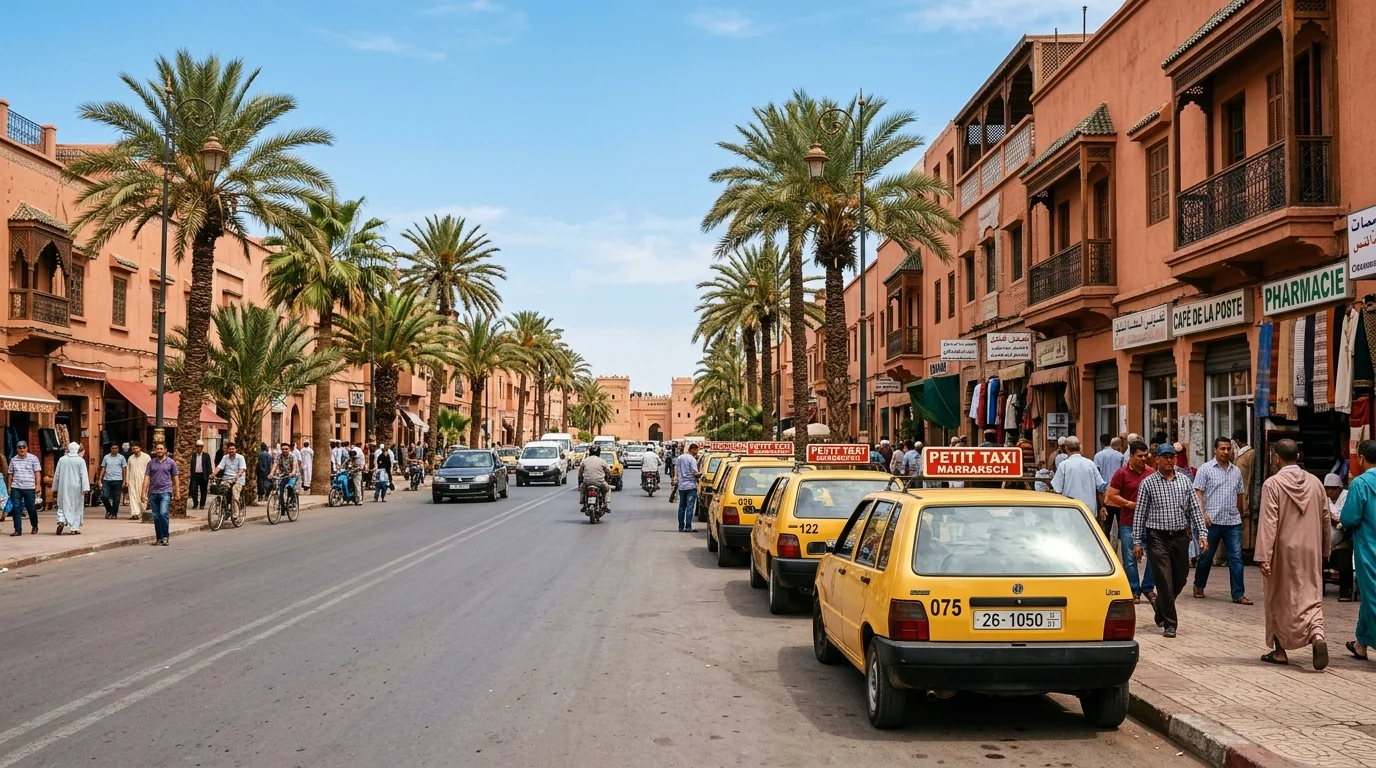
Petit Taxis are designed exclusively for quick urban journeys—such as traveling from Gueliz to Jemaa el-Fnaa, or from your riad’s nearest gate to the train station.
The City Color Code
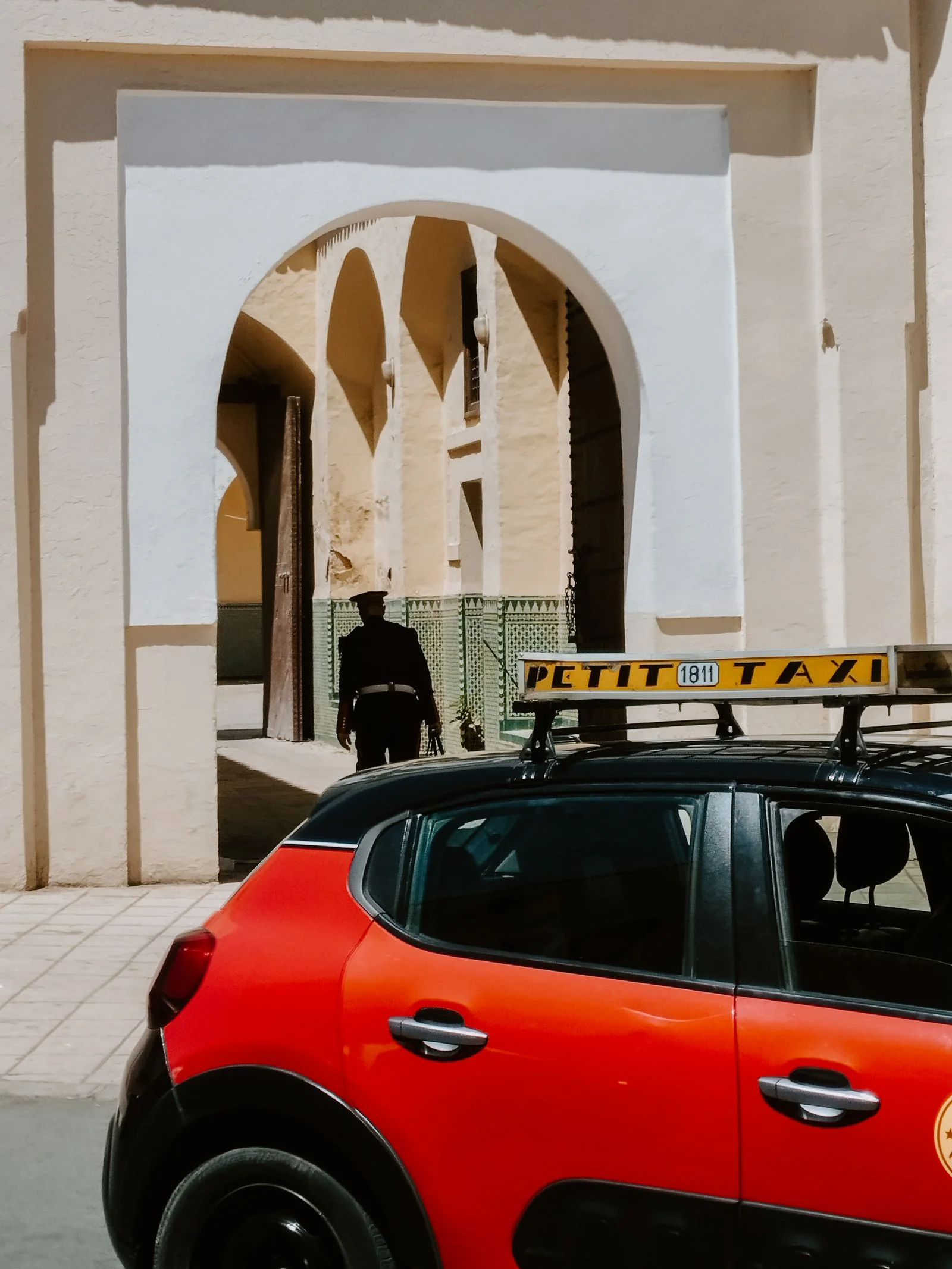
To prevent unregulated cabs from operating across provincial borders, every Moroccan city paints its Petit Taxis in an official signature color:
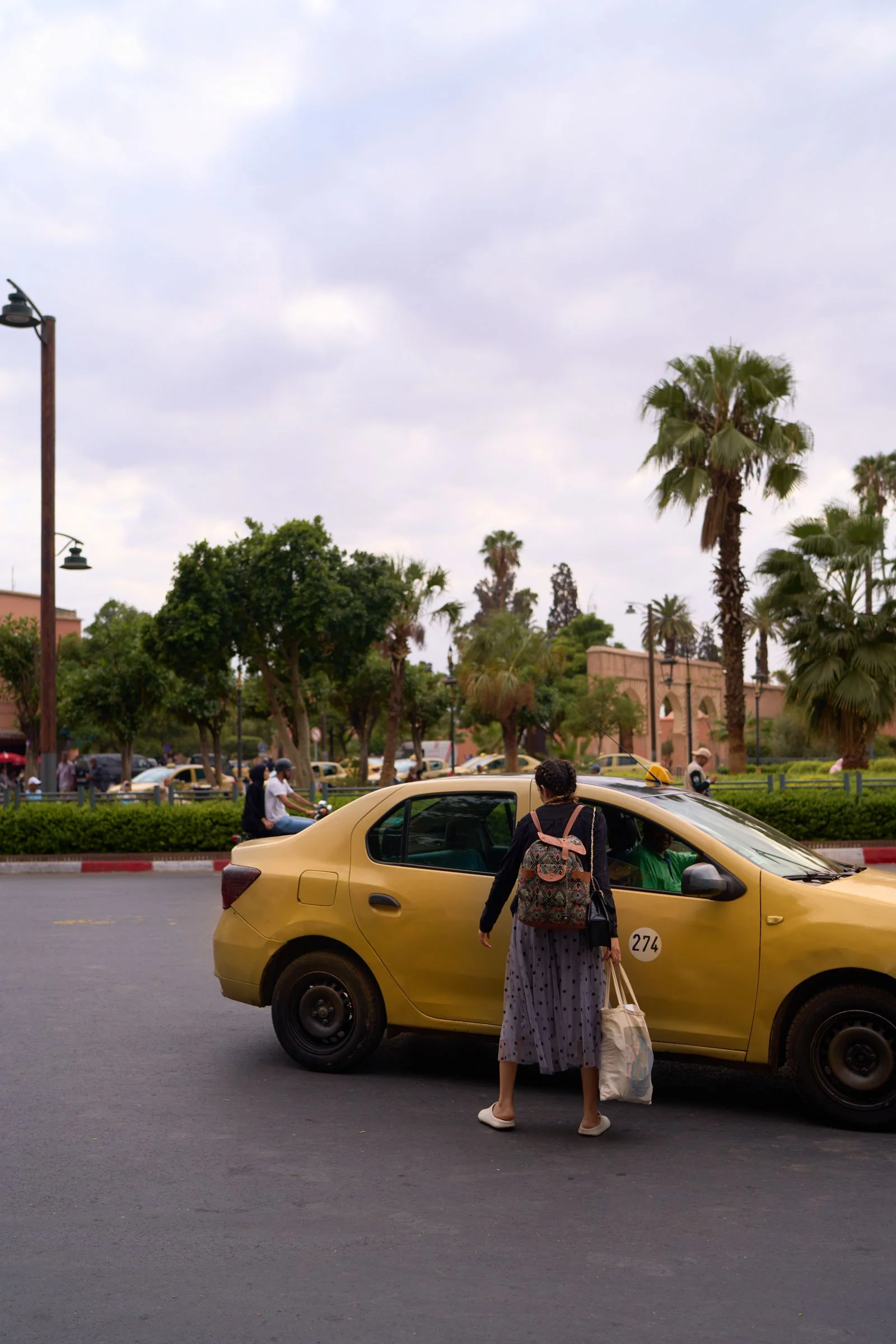
- Marrakech: Ochre / Yellow
- Casablanca: Crimson Red
- Rabat: Cobalt Blue
- Fes: Bright Red
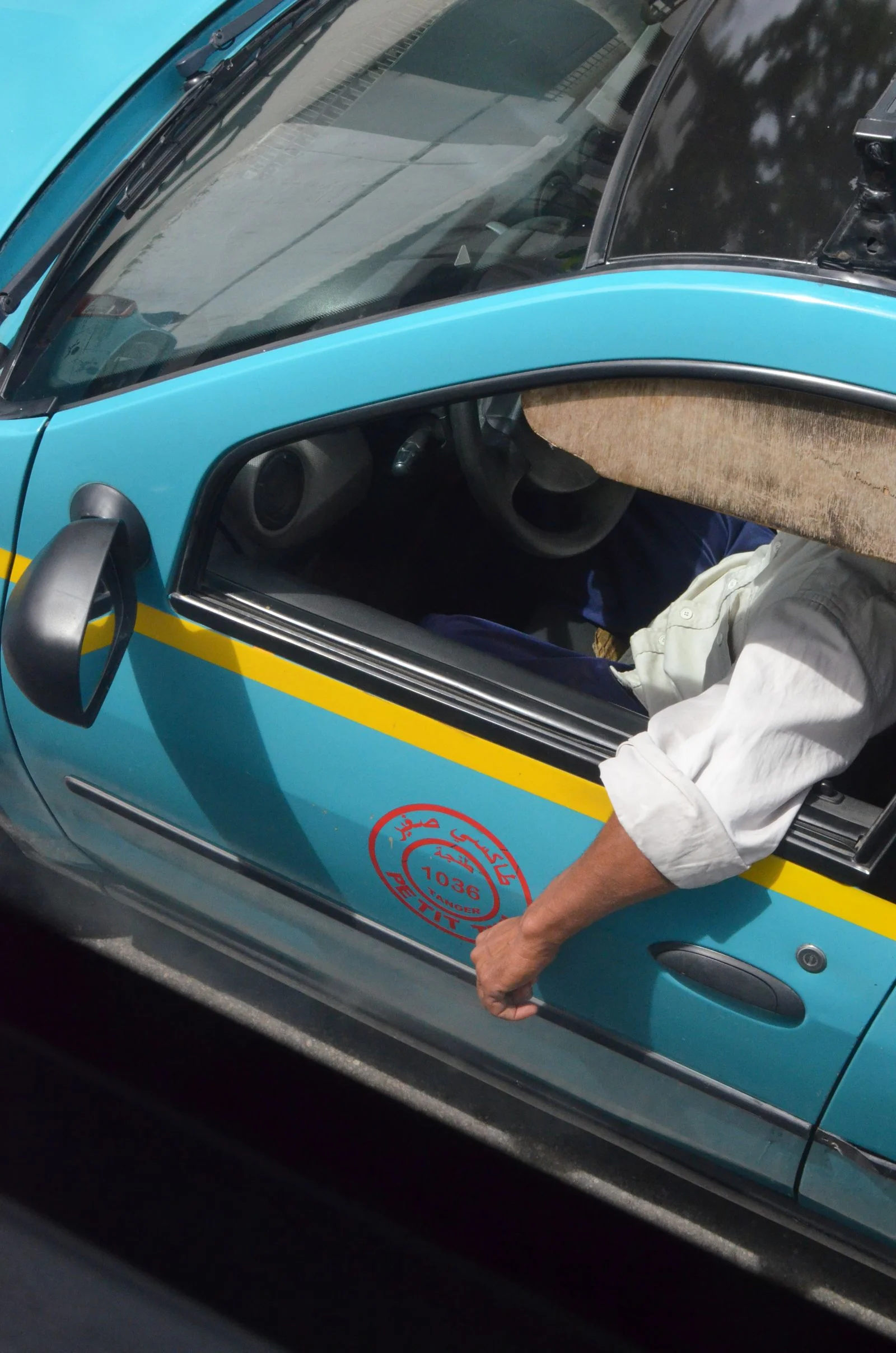
- Tangier: Light Blue with a Yellow Stripe
- Agadir & Essaouira: Orange / Ochre
- Chefchaouen: Powder Blue
How the Meter (Le Compteur) Works
By Moroccan municipal law, every Petit Taxi driver must switch on the taximeter as soon as you step inside. Standard daytime daytime base flag drop is approximately 2.00 to 3.00 MAD, with a legal minimum fare of 7.50 to 10.00 MAD depending on the city, even if the trip is only two blocks.
A typical cross-town ride in Marrakech (for example, between Gueliz and the edge of the Medina) usually costs 15 to 25 MAD on the meter.
The 50% Night Surcharge
Between 8:00 PM (or 8:30 PM in summer) and 6:00 AM, Petit Taxis legally apply a 50% night surcharge. The meter automatically adjusts to night rate (Tarif 2).
A ride that costs 20 MAD at noon will cost 30 MAD at midnight. This is a legitimate legal regulation, not an overcharging scam.
2. Grand Taxis: Intercity Routes & The “Blasa” System
Grand Taxis operate as communal regional transport. They connect neighboring towns, transport hubs, and outlying attractions that trains and city buses do not reach—such as the Ourika Valley, Imlil in the High Atlas, or Taghazout from Agadir.
The Shared Seat System (Blasa)
Grand Taxis do not use meters. Instead, each fixed destination has an officially posted per-seat rate (Blasa).
The vehicle departs only when all 6 passenger seats are filled:
- Two passengers sit side-by-side in the front passenger seat.
- Four passengers sit across the back bench.
If you prefer not to wait for the car to fill up, or if you want personal space and extra comfort, you can pay for all empty seats. Buying all 6 seats converts the Grand Taxi into a private charter (Course).
Indicative Grand Taxi Fares
- Marrakech to Ourika Valley: ~25 to 35 MAD per seat (or ~180 to 200 MAD for the entire taxi).
- Marrakech to Imlil (Toubkal base): ~50 to 65 MAD per seat (or ~300 to 350 MAD private).
- Tangier to Chefchaouen: ~75 to 90 MAD per seat.
3. How Not to Get Overcharged: Practical Street Rules
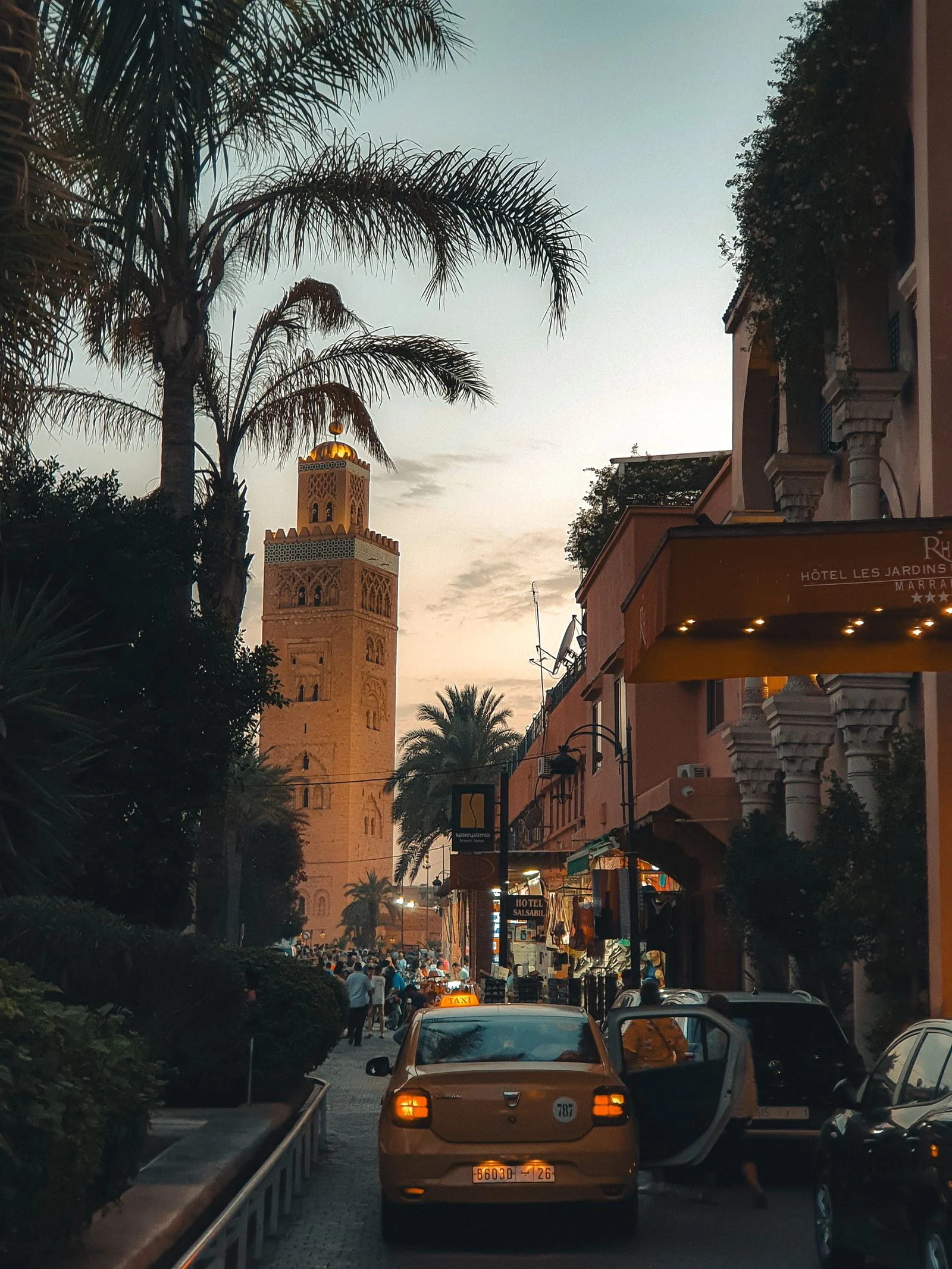
While most Moroccan taxi drivers are hardworking professionals, tourist hubs naturally attract opportunistic drivers looking for flat-rate tourist prices. Following these street-tested practices keeps your transactions fair:
1. Say the Magic Words Before Stepping In
Never get into a Petit Taxi without confirming the meter. As you open the door, state your destination and say politely:
- In Moroccan Darija: “Khddm l-compteur, 3afak” (Turn on the meter, please).
- In French: “Le compteur, s’il vous plaît.”
If the driver shakes his head or claims the meter is out of order, do not argue. Say “La, shukran” (No, thank you), close the door, and flag the next cab. Another empty Petit Taxi will pass within seconds.
2. Avoid Taxis Waiting Directly Outside Major Landmarks
Drivers parked directly in front of Jemaa el-Fnaa, Marrakech Menara Airport, or Casa-Voyageurs train station often refuse the meter because they wait hours specifically for unsuspecting arrivals.
Walk 100 meters down the avenue away from the tourist crowd to hail a moving taxi. Moving drivers are far more likely to click the meter without hesitation. For deeper advice on common city pitfalls, check our guide to Marrakech tourist scams.
3. Always Carry Small Currency (Dirham Coins & Small Notes)
Taxi drivers rarely carry enough change to break a 100 MAD or 200 MAD banknote for a 15 MAD fare. Always keep 5, 10, 20, and 50 MAD notes accessible in your pocket.
If you hand a driver a 200 MAD bill for an 18 MAD ride, you risk an awkward delay while he searches nearby shops for change.
4. Check Ride-Hailing Apps for Price Benchmarks
Apps like InDrive and Careem operate widely in Moroccan metropolitan centers (Casablanca, Rabat, Marrakech, and Tangier).
Even if you prefer taking regular street taxis, opening InDrive provides an immediate, transparent estimate of what your route actually costs before you negotiate.
Do Taxis in Morocco Take Card?
No. Taxis in Morocco do not accept credit or debit cards.
Virtually 100% of Petit and Grand Taxis operate strictly on cash in Moroccan Dirhams (MAD). Foreign currencies like Euros or US Dollars are occasionally accepted in emergencies near airports, but always at poor, rounded-up exchange rates. Withdraw cash from a local bank ATM before heading out.
Do You Tip Taxis in Morocco? (The Round-Up Rule)
Tipping taxi drivers in Morocco is customary but modest. Locals and regular travelers use the round-up rule:
- If your metered fare comes to 17 MAD, hand the driver 20 MAD and tell him to keep the change (“Khlli s-serf”).
- If the ride is 32 MAD, rounding up to 35 MAD or 40 MAD is considered polite and generous for good service.
- For long Grand Taxi day-trips where the driver handles heavy luggage or provides local advice, a tip of 20 to 50 MAD for the vehicle is appreciated.
Frequently Asked Questions
How much are taxis in Morocco for typical city trips?
A standard Petit Taxi ride inside city centers like Marrakech or Casablanca usually ranges between 15 MAD and 30 MAD during daylight hours, and 25 MAD to 45 MAD after 8:00 PM with the 50% night tariff applied.
Do petit taxis have meters in Morocco?
Yes. By Moroccan transport regulations, all Petit Taxis are legally equipped with a calibrated taximeter (compteur). Drivers are mandated to use it for all passenger trips within city limits.
Can a Petit Taxi take another passenger while I am inside?
Yes. Petit Taxis in Morocco are permitted to pick up up to 3 separate passengers along the same general route. The meter tracks the distance for each ride independently, and each passenger pays their respective metered share upon arrival.
What should I do if a driver refuses to turn on the meter?
Politely decline the ride before getting in and hail another passing cab. If a driver agreed to the meter but turned it off during transit, remain calm, hand him a fair estimated fare based on standard rates (e.g., 20 MAD for a short city ride), and exit the vehicle. Noting the medallion number painted on the front passenger door resolves disputes quickly.