The Blue City of Morocco: Why is Chefchaouen Blue?
Tucked away in the dramatic peaks of the Rif Mountains in northwestern Morocco lies Chefchaouen, known almost universally by travelers as the Blue City of Morocco.
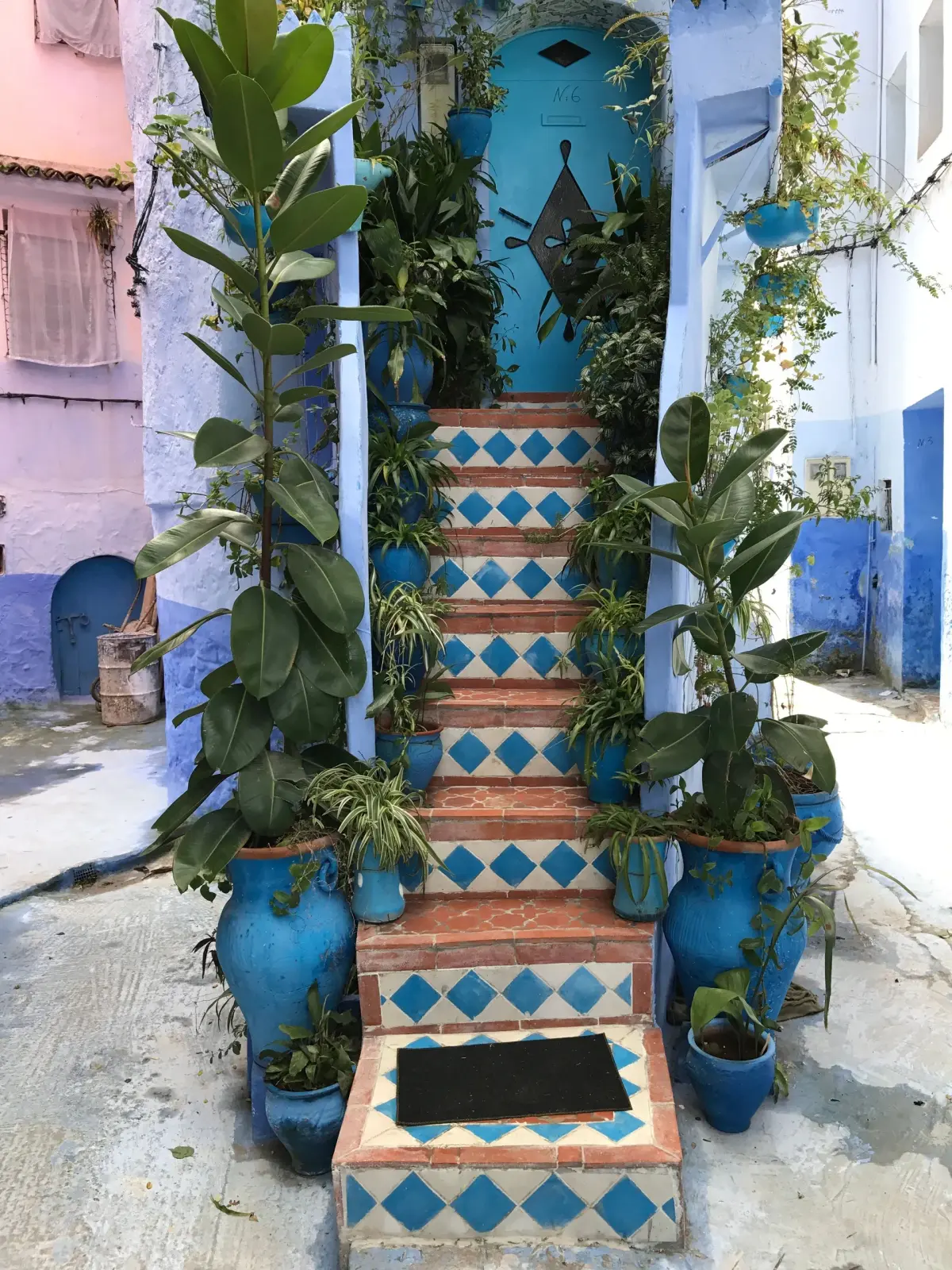
If you have spent any time looking at travel photos of Morocco, you have undoubtedly seen its striking, monochromatic alleyways. Almost every wall, doorway, staircase, and cobblestone in the historic medina is painted in varying shades of cerulean, indigo, and sky blue.
While many visitors come purely to photograph the blue streets, the town offers much more than just a visual spectacle. It serves as a calm, accessible introduction to Moroccan medina life, offering a completely different pace compared to the chaotic, fast-paced souks of Marrakech or Fes. The mountain air is cooler, the vendors are remarkably relaxed, and getting intentionally lost in the blue labyrinth is a stress-free experience.
This guide covers the history, logistics, and practical realities of visiting the Blue City of Morocco.
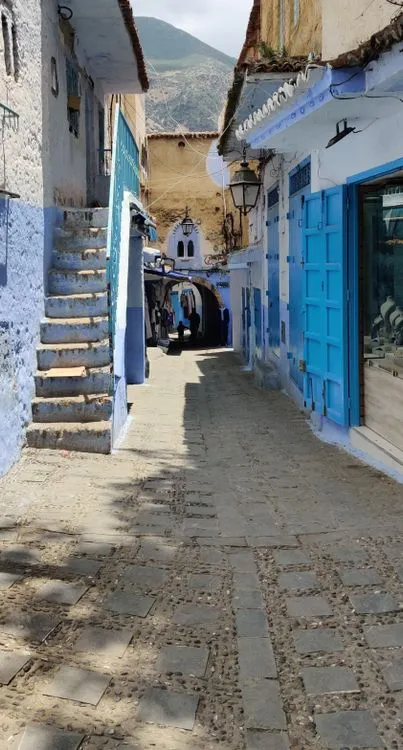 Wandering through the vibrant blue-washed alleyways of Chefchaouen.
Why is Chefchaouen Called the Blue City?
The most common question visitors ask is why the city is painted blue. The truth is that the exact origin is debated, and there are several competing theories that locals will happily share with you over a pot of mint tea.
The Jewish Refugee Theory
The most widely accepted historical explanation traces the blue paint back to the 1930s. During this time, a significant number of Jewish refugees fled Europe and settled in Chefchaouen. In Jewish tradition, blue represents the sky and heaven, serving as a constant reminder of God’s presence. The refugees began painting their homes blue, and the practice eventually spread throughout the entire medina, adopted by the Muslim population as well.
The Mosquito Theory
A more practical, though perhaps less romantic, theory suggests that the blue wash was originally used to repel mosquitoes. Some locals believe that mosquitoes dislike clear, moving water, and painting the walls to resemble a cascading blue river deters the insects during the warmer months.
The Cooling Effect
Another pragmatic explanation is heat management. The Rif Mountains can get surprisingly hot in the peak of summer (July and August). The light blue and white lime wash reflects the harsh summer sun, helping to keep the interior of the homes cooler than traditional bare stone or dark paint would.
Regardless of how it started, the tradition is now maintained fiercely by the local government and residents. Every spring, just before the high tourist season begins, locals undertake a massive repainting effort to ensure the Blue City of Morocco remains remarkably vibrant.
Is the Blue City Worth Visiting?
When a destination becomes highly famous on social media, travelers naturally wonder if it is an authentic experience or an overcrowded tourist trap.
The Pros:
- It really is that blue. There are no filters required; the medina is genuinely washed in brilliant shades of blue at every turn.
- It is incredibly safe and calm. Unlike Fes, you will not be aggressively hassled by unofficial guides, and getting lost is safe.
- Great mountain access. It is the perfect base camp for hiking in the Rif Mountains.
The Cons:
- Crowds. During peak season (April/May and September/October), the narrow alleys can feel congested with tour groups.
- Distance. It is not located on the main train line. Reaching it requires a 4-hour bus ride from Fes or a 2.5-hour ride from Tangier.
- Limited historical monuments. Aside from the Kasbah, the town itself is the monument. Do not expect grand palaces or massive madrasas.
If you enjoy slow travel, photography, and mountain scenery, it is absolutely worth the detour.
What is There to Do in the Blue City?
Because the town is so compact, the primary activity in the Blue City is simply wandering the medina, shopping for local wool blankets, and drinking mint tea in Plaza Uta el-Hammam.
However, there are specific landmarks and day trips that you should not miss, such as hiking up to the Spanish Mosque for sunset, visiting the historic Kasbah Museum, or taking a taxi into Talassemtane National Park to hike the Akchour Waterfalls.
For a complete, detailed breakdown of activities, read our dedicated guide: The 15 Best Things to Do in Chefchaouen
Photography Etiquette in the Blue City
Because the Blue City of Morocco is so visually stunning, visitors often treat the entire town as a giant photo studio. It is crucial to remember that this is a living, breathing residential neighborhood.
- Do not photograph locals without permission. The older generation, in particular, strongly dislikes having their photo taken.
- Respect closed doors. Do not sit on someone’s private doorstep or try to peek inside an open door for a photo.
- Look for signs. Some residents have put up small “No Photo” signs on their highly decorated doorways because they are tired of tourists blocking their entrances.
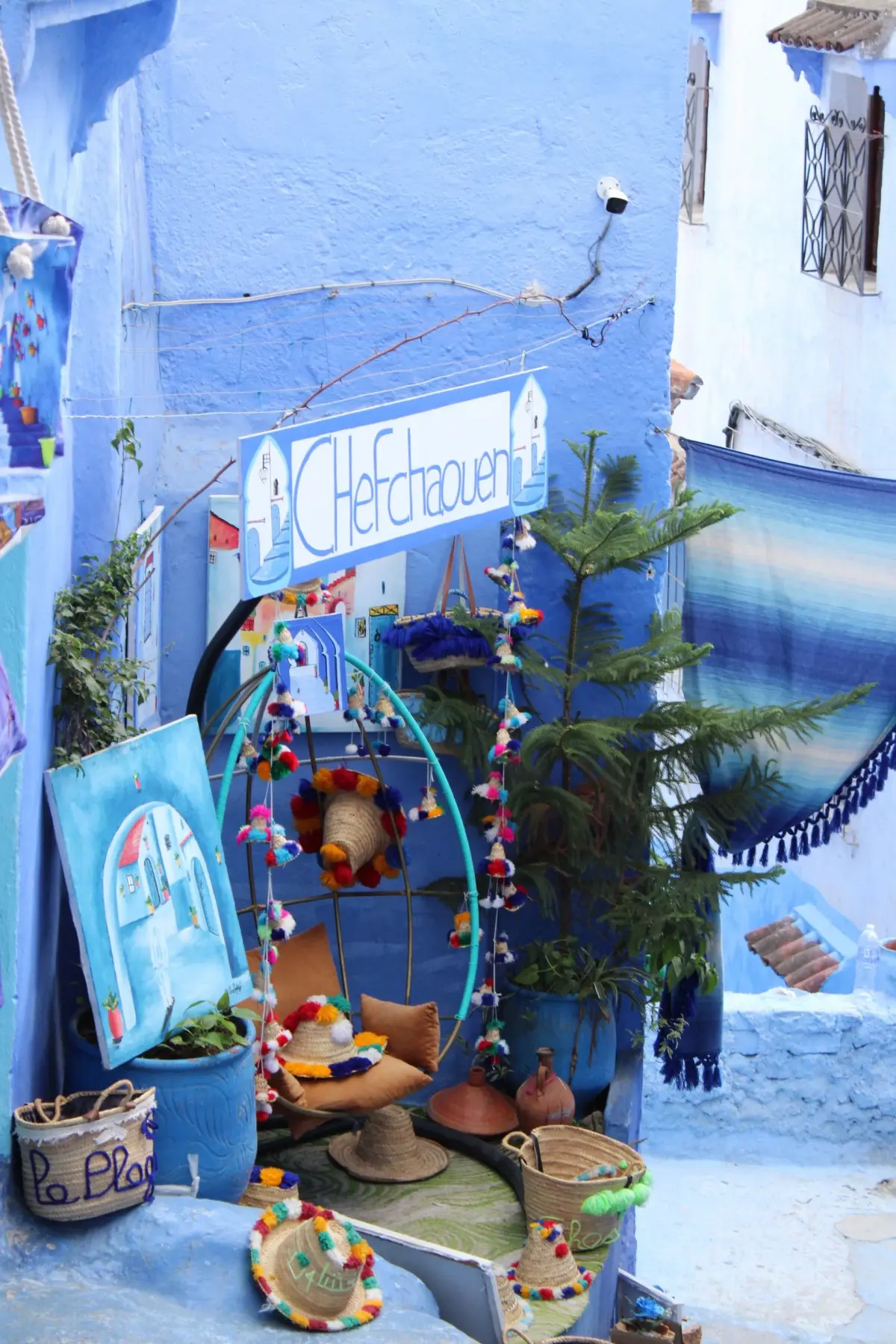
- Tip for props. If a local has set up an elaborate display of hats, pots, or fruits specifically for photos, it is customary to give them 5 to 10 MAD for taking pictures of their setup.
How to Get to the Blue City
Reaching Chefchaouen requires road transportation, as the town does not have a train station or a commercial airport. Because it is nestled deep in the mountains, the roads can be winding.
From Tangier
Tangier is the most common entry point for travelers heading to the Blue City.
- Bus: The CTM bus takes about 2.5 hours and costs roughly 70 MAD (plus 5-10 MAD for checked luggage). It is comfortable and air-conditioned. Book at least a day in advance in summer.
- Grand Taxi: A shared taxi costs about 70 MAD for a seat, or you can hire the whole taxi for 400-500 MAD. They leave when full from the main taxi rank in Tangier.
From Fes
Traveling from Fes is popular but takes longer.
- Bus: The CTM bus takes around 4 to 4.5 hours and costs between 120 and 150 MAD depending on the specific time. The road is very scenic but quite winding; take motion sickness pills if you are sensitive.
- Private Transfer: Hiring a private driver costs around 1000-1400 MAD but allows you to stop at the Volubilis Roman ruins along the way.
From Marrakech
- Note: Do not attempt to travel directly from Marrakech to Chefchaouen in one day. It is a grueling 9 to 10-hour drive. It is best to take the high-speed Al Boraq train from Marrakech to Tangier first, and then take a bus or taxi to Chefchaouen.
Where to Stay: Best Riads in the Blue Medina
Accommodations in Chefchaouen cater to all travel styles, but staying inside the old medina is highly recommended for the atmosphere. Because the medina is built on a hill, be prepared to carry your luggage up steep stairs (or hire a local porter at the taxi drop-off for 20 MAD).
If you are unsure which neighborhood is best, check our detailed guide on the Best Places to Stay in Chefchaouen.
- Budget Hostels & Guesthouses: Expect to pay 150–300 MAD ($15–$30 USD) per night for a simple room or dorm bed. Look near the bottom of the medina near Bab l’Ain to avoid carrying bags uphill.
- Mid-Range Traditional Riads: Offering rooftop breakfast views and beautiful tilework, comfortable rooms usually range from 400–800 MAD ($40–$80 USD) per night.
- Luxury Boutique Hotels: Upscale stays like Lina Ryad & Spa feature indoor heated pools and private luxury hammams.
Frequently Asked Questions
Is the Blue City Morocco safe for travelers?
Yes, Chefchaouen is widely considered one of the safest and most tranquil towns in Morocco. It is very popular with solo female travelers and families. The relaxed pace makes it a great introduction to the country.
How many days should I stay in the Blue City?
For most travelers, 1 to 2 full days is plenty of time. If you need help planning your days, check our Chefchaouen 1 or 2 Day Itinerary.
Is there a lot of hashish in Chefchaouen?
The Rif Mountains are the center of cannabis production in Morocco. You will likely be offered hashish (kif) while walking in the mountains or on the edges of the medina. A firm but polite "No, thank you" (La, shukran) is usually enough for vendors to leave you alone. Remember that despite its prevalence, marijuana is strictly illegal in Morocco.
Can I drink the tap water in Chefchaouen?
Chefchaouen is famous for its clean mountain spring water (Ras El Maa). Many locals drink straight from the public fountains. However, travelers with sensitive stomachs should stick to bottled water to avoid any sudden changes in mineral content.