Souk El Had Agadir: Gates, Map & Bargaining Guide
Covering over 13 hectares with more than 3,000 stalls, Souk El Had in Agadir is widely recognized as one of the largest enclosed urban markets in Africa.
Unlike the ancient labyrinthine souks of Marrakech or Fes, Souk El Had is laid out behind modern high walls with numbered gates. It is clean, organized, and straightforward to navigate once you know which gate corresponds to what you are looking for.
Whether you are shopping for pure Argan oil, leather babouches, fresh spices, or traditional Amazigh pottery, this practical guide breaks down how to get inside, where to go, and how to avoid paying tourist premiums.
Souk El Had at a Glance
| Feature | Details |
|---|---|
| Location | Rue 2 Mars / Blvd Hassan II, Agadir |
| Operating Days | Tuesday to Sunday (Closed Mondays) |
| Opening Hours | 6:00 AM – 8:30 PM |
| Best Time to Visit | 9:30 AM – 11:30 AM (Cooler, less crowded) |
| Recommended Stay | 2 to 3 hours |
| Entry Fee | Free |
| Payment Method | Cash only (Moroccan Dirham - MAD) |
Understanding the Gates: How to Enter
Souk El Had has 13 numbered gates (Portes). Entering through the wrong gate can mean walking through hundreds of meters of household plastic goods before finding what you actually came to see.
Here is a simple gate key for travelers:
Gate 6 & Gate 7 (Best for Spices, Argan Oil & Tea)
If you want culinary spices, pure culinary Argan oil, cosmetic oil, dried fruits, nuts, or traditional mint tea blends, head straight to Gate 6 or Gate 7. This area is filled with colorful spice pyramids, loose olives, and cooperative-supplied Argan products.
Gate 9 & Gate 10 (Best for Crafts, Souvenirs & Leather)
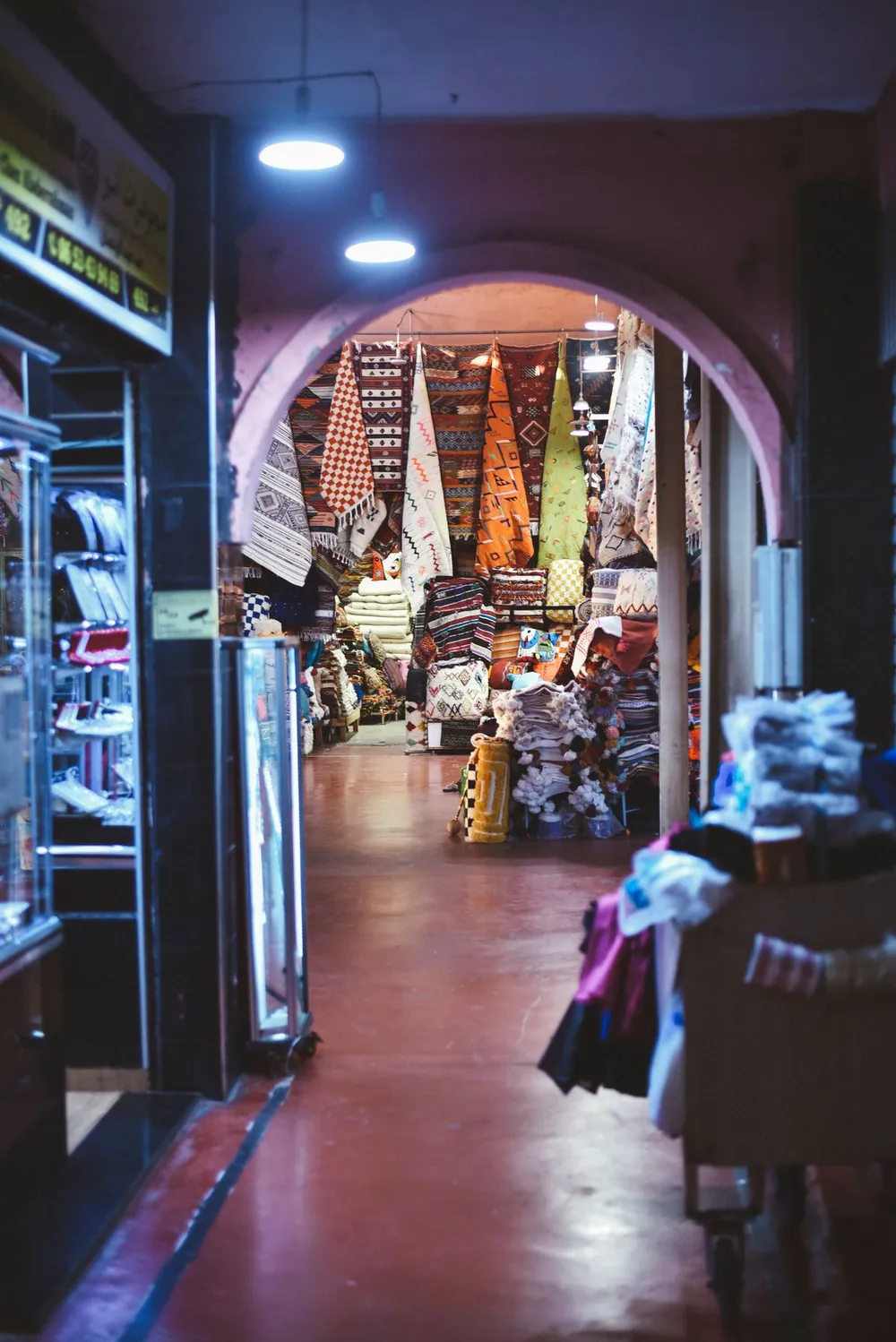
For leather slippers (babouches), leather bags, brass lanterns, carpets, silver jewelry, and wooden handicrafts, use Gate 9 or Gate 10. This section is geared toward visitors looking for authentic Moroccan keepsakes.
Gate 2 & Gate 3 (Best for Fresh Produce & Street Food)
If you want to experience where local Agadir residents shop daily for fresh oranges, dates, figs, herbs, and fish, enter through Gate 2 or Gate 3.
Gate 11 & Gate 12 (Clothing, Djellabas & Fabrics)
For traditional Moroccan attire (djellabas, kaftans, scarves) as well as modern clothing, Gate 11 and 12 house the garment section.
[!TIP] Insider Tip: If you take a Petit Taxi to the market, simply tell the driver: “Souk El Had, Bab Sitta” (Gate 6) or “Bab Tis’a” (Gate 9). Drivers know the gate numbers by heart.
What to Buy at Souk El Had (With Indicative Prices)
Prices in Souk El Had are generally lower than in Marrakech or Tangier, but haggling is still standard practice for handicrafts and non-priced items.
1. Pure Argan Oil & Amlou
The Souss-Massa region surrounding Agadir is the global epicenter of Argan tree forests. Souk El Had is one of the best places to buy authentic Argan oil directly from local producers.
- Cosmetic Argan Oil (100ml): 60 – 90 MAD ($6 – $9 USD)
- Culinary Argan Oil (250ml): 90 – 130 MAD ($9 – $13 USD)
- Amlou (Moroccan almond & Argan spread, 250g): 40 – 70 MAD ($4 – $7 USD)
[!WARNING] Buying Tip: Pure Argan oil should have a subtle nutty scent (culinary) or a light natural aroma (cosmetic). Avoid oils priced unrealistically low (under 40 MAD for 100ml)—they are often diluted with cheap sunflower oil.
2. Spices & Dried Herbs
Look for saffron from Taliouine (a mountain village near Agadir), cumin, ras el hanout blends, and sweet paprika.
- Ras el Hanout (100g): 15 – 25 MAD ($1.50 – $2.50 USD)
- Pure Taliouine Saffron (1 gram): 30 – 45 MAD ($3 – $4.50 USD)
- Fresh Mint & Herbs: 2 – 5 MAD per bundle
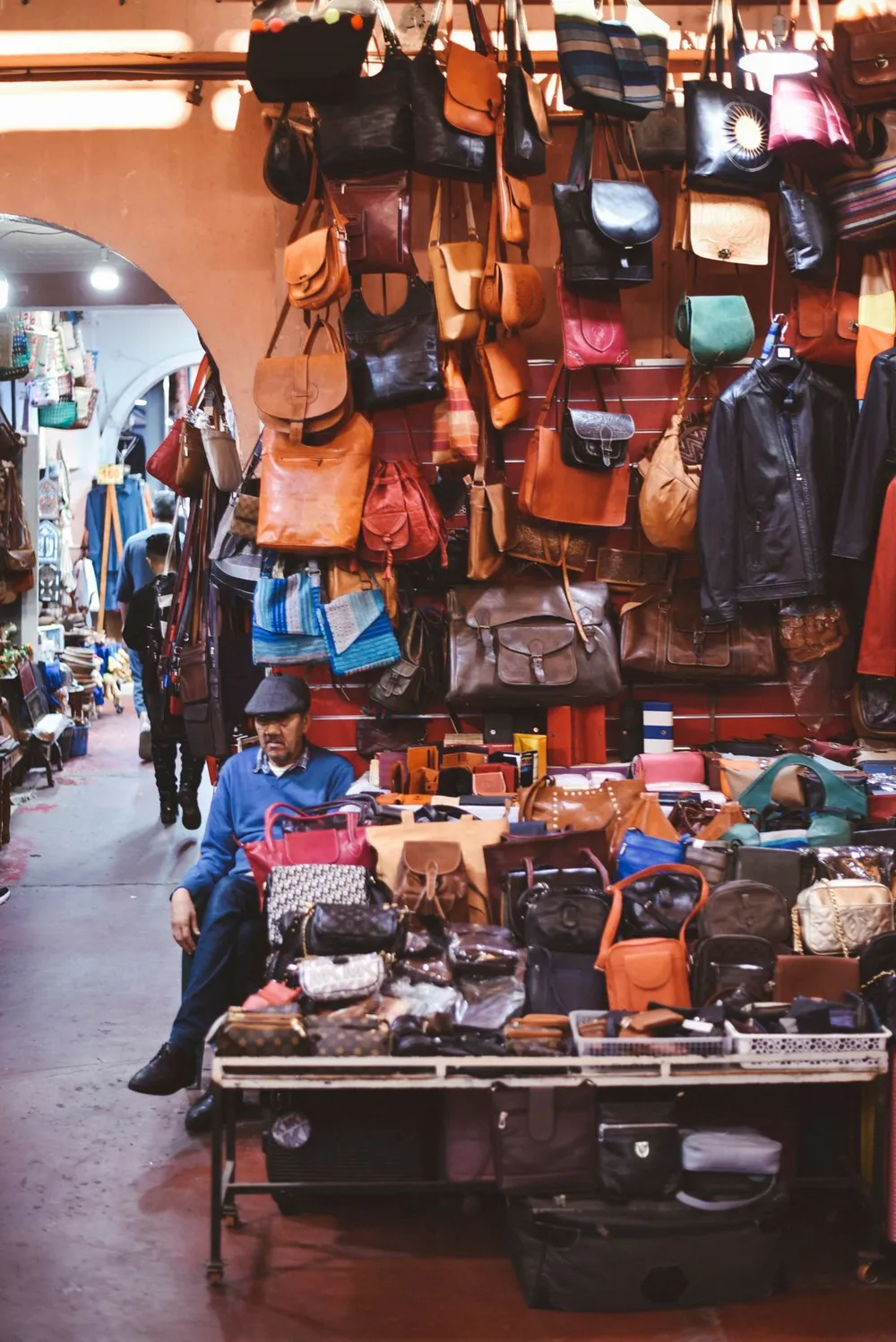
3. Leather Goods & Babouches
You will find handmade sheepskin and goatskin slippers (babouches), belts, wallets, and overnight duffel bags.
- Leather Babouches: 70 – 120 MAD ($7 – $12 USD) depending on leather quality and sole stitching.
- Leather Backpacks / Bags: 250 – 500 MAD ($25 – $50 USD).
4. Amazigh Silver Jewelry & Pottery
Agadir has strong Amazigh (Berber) heritage. Search for heavy silver-plated bangles, enamel necklaces, and hand-painted ceramics from Safi or Salé.
- Hand-painted Tagine (Decorative/Cooking): 30 – 70 MAD ($3 – $7 USD).
- Berber Silver Enamel Earring Pairs: 80 – 180 MAD ($8 – $18 USD).
How to Haggle Like a Pro in Souk El Had
Haggling (mchawra) is an expected social interaction in Moroccan souks, but it should always remain friendly and respectful.
- Ask for the price first: Never start negotiating until the seller names their starting figure.
- Offer 50% to 60% of the initial price: If a vendor asks 200 MAD for a bag, counter politely with 100 MAD.
- Settle in the middle: Aim to agree around 120–140 MAD.
- The “Walk Away” tactic: If the seller refuses a reasonable price, thank them and walk toward another stall. In 80% of cases, if your offer was realistic, they will call you back.
- Keep exact change: Carrying 20, 50, and 100 MAD notes makes transactions smoother and avoids waiting for change.
Practical Tips for Your Visit
- Monday Closure: Souk El Had is strictly closed every Monday for deep cleaning and maintenance. Plan your itinerary accordingly.
- Safety & Pickpockets: Souk El Had is safe and well-policed, but like any crowded market, keep your phone and wallet in front pockets or a zipped bag.
- Getting There: A Petit Taxi from Agadir beach promenade or Talborjt to Souk El Had costs between 10 and 20 MAD ($1 – $2 USD) on the meter.
- Public Restrooms: Clean paid restrooms (2 MAD) are located near Gate 6 and Gate 10.
Frequently Asked Questions
Is Souk El Had cheaper than Marrakech souks?
Yes. Because Agadir is the capital of the Souss region where Argan and leather products are produced, prices in Souk El Had are often 20% to 30% lower than in Marrakech, and pressure from vendors is generally milder.
Is Souk El Had open on Fridays?
Yes, Souk El Had is open on Fridays. However, some stalls close briefly between 12:30 PM and 3:00 PM for Friday congregational prayers.
Can I pay with credit cards at Souk El Had?
No. Virtually all vendors in Souk El Had take cash only in Moroccan Dirhams (MAD). ATMs are available near Gate 6 and Gate 9 outside the main walls.
How do I get to Souk El Had from Agadir beach?
Take a red Petit Taxi from any hotel or beach resort along the Boulevard 20 Août. The ride takes around 7–10 minutes and costs about 12–18 MAD on the meter.
Conclusion
Souk El Had is an essential Agadir experience. It offers an authentic glimpse into daily Moroccan commercial life away from resort sun loungers, while providing some of the best prices in the country for Argan oil, spices, and leathercraft.
Continue planning your Agadir trip with our full guide to the best things to do in Agadir.