Things to Do in Rabat: 15 Best Places & Insider Travel Guide
Rabat is Morocco’s political capital, but to the traveler, it feels like an elegant coastal breather between the hectic energy of Marrakech and the urban sprawl of Casablanca.
Surrounded by Almohad ramparts, palm-lined avenues, and Atlantic ocean waves, Rabat blends UNESCO-protected medieval fortresses with modern art museums, clean tram lines, and relaxed medina souks. Unlike other Imperial cities, shopkeepers won’t chase you down the street, taxi drivers routinely use meters, and you can explore royal monuments without fighting tour bus crowds.
Whether you’re visiting on a day trip via the Al Boraq high-speed train or staying for a few days, here are the 15 best things to do in Rabat — complete with exact 2026 prices in MAD, operating hours, and practical local advice.
| Quick Overview | Details |
|---|---|
| Best for | Imperial history, coastal walks, relaxed shopping, modern art |
| Recommended stay | 1–3 days |
| Currency | Moroccan Dirham (MAD) |
| Getting around | Tramway Lines 1 & 2 (6 MAD), Blue Petit Taxis |
| Best Time to Visit | March to June & September to November |
[Insert Interactive Rabat Map Component Here]
Top Historical Landmarks in Rabat
1. Explore the Blue-and-White Kasbah des Oudayas
- What it is & Why visit: Perched on a cliff overlooking the Bouregreg River and the Atlantic, this 12th-century Almohad citadel is Rabat’s most picturesque quarter. Its winding narrow residential streets are painted in striking blue and white hues, leading to quiet garden courtyards and sweeping ocean vistas.
- Indicative Price Range: Free to enter the citadel and Andalusian Gardens. Unofficial guides at the gate charge 50–100 MAD, but you do not need one.
- Opening hours: Citadel is open 24/7. Andalusian Gardens are open daily from 8:00 AM to 6:00 PM.
- How long to spend: 1.5 – 2 hours.
- Insider Tip: Walk through the Bab Oudaia gate to the famous Café des Oudaïas. Order a glass of fresh mint tea and traditional almond cornes de gazelle pastries while watching the surfers down at the beach. Aim to get there around 4:30 PM for sunset.
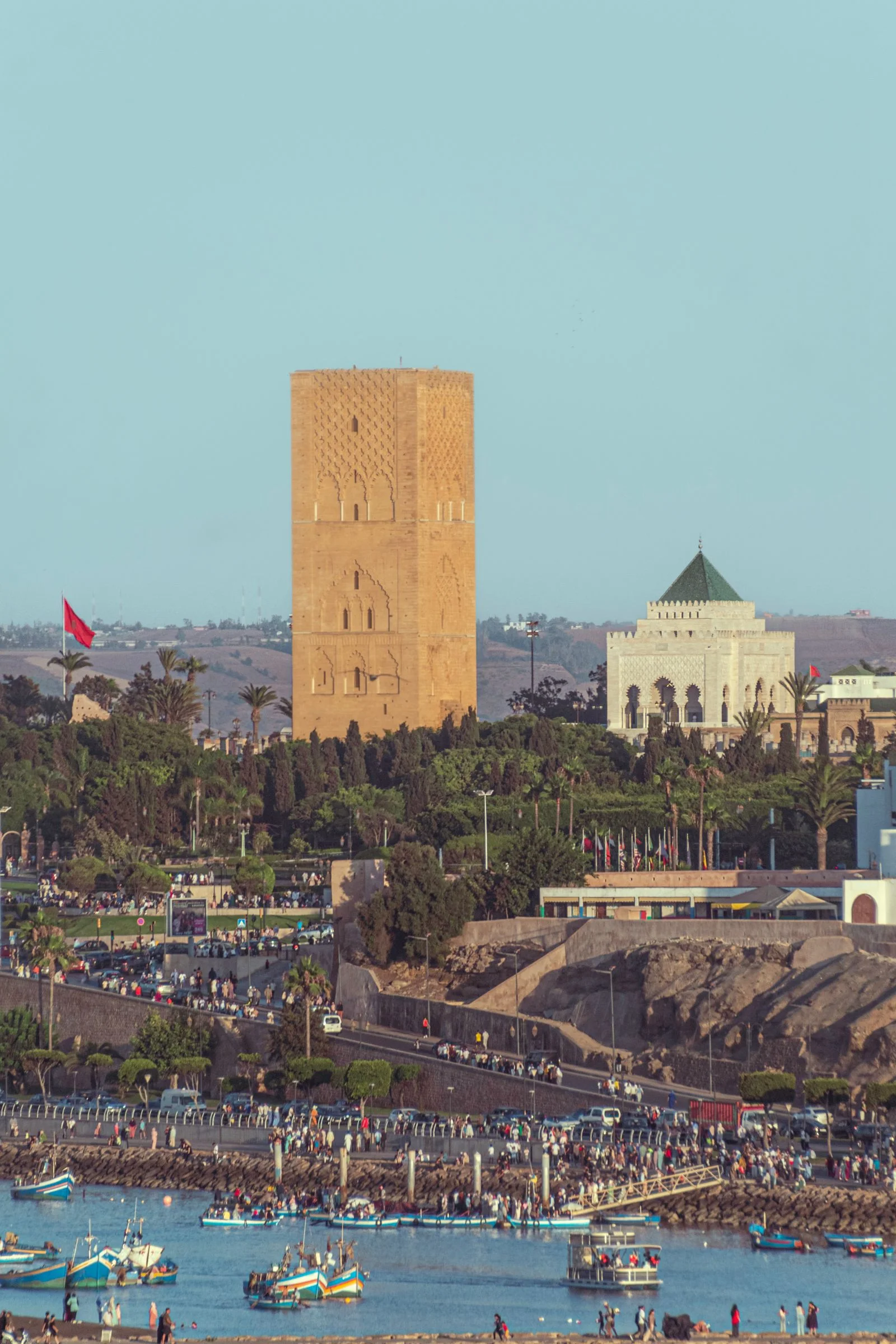
2. Stand Before Hassan Tower & Mausoleum of Mohammed V
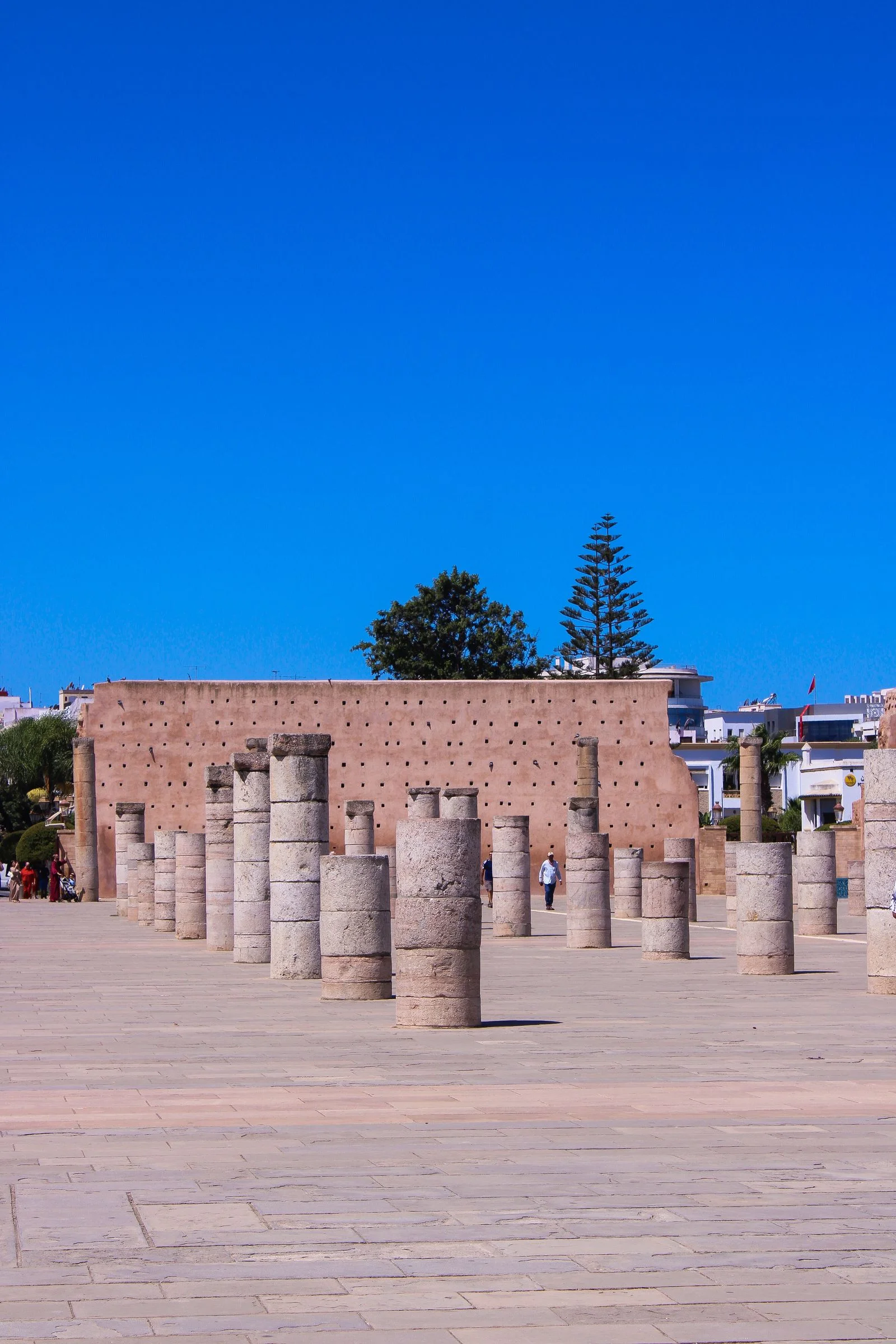
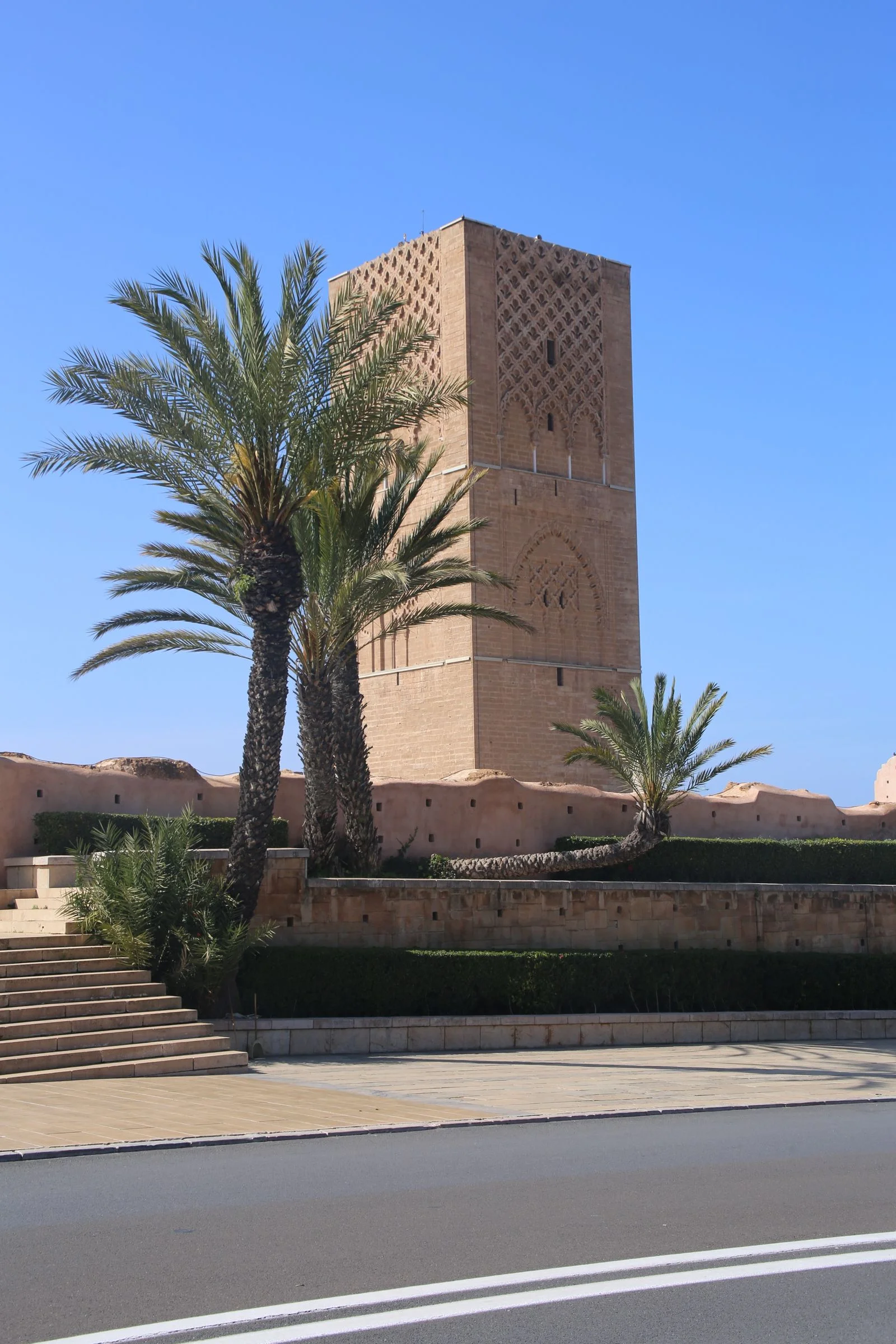
- What it is & Why visit: The defining symbol of Rabat. Hassan Tower is a majestic 44-meter 12th-century minaret, surrounded by 200 freestanding sandstone columns from an unfinished grand mosque commissioned by Sultan Yacoub al-Mansour in 1195. Directly opposite stands the white marble Mausoleum of Mohammed V, housing the tombs of King Mohammed V and his sons King Hassan II and Prince Abdallah.
- Indicative Price Range: Free entry.
- Opening hours: Daily from 8:00 AM to 6:00 PM.
- How long to spend: 45 minutes – 1 hour.
- Insider Tip: Dress respectfully (cover shoulders and knees) to enter the mausoleum balcony. The royal guards in traditional ceremonial attire at the entrances are accustomed to tourists, but always ask politely before snapping close-up photos.
3. Discover the Ancient Ruins of Chellah Necropolis
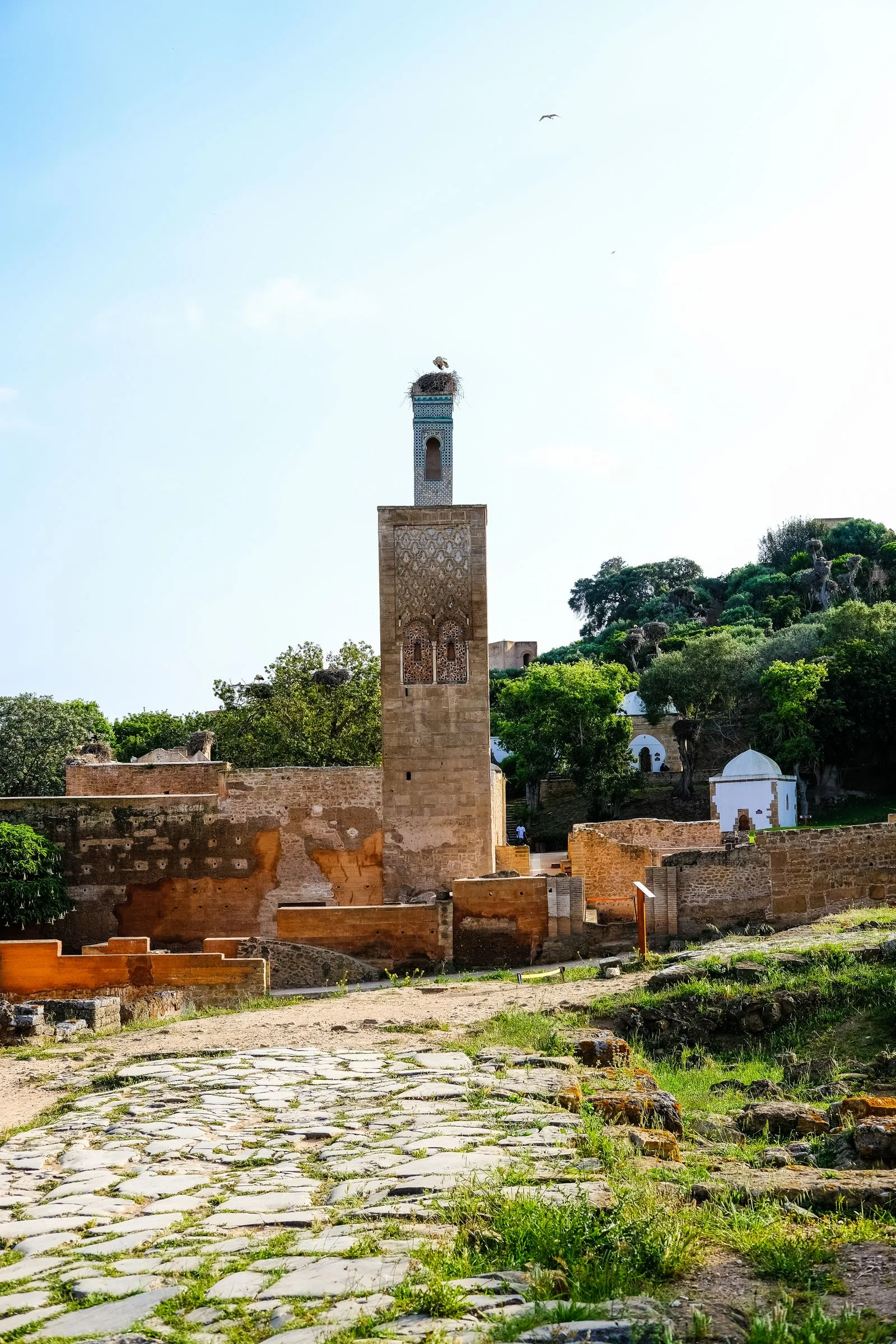
- What it is & Why visit: A peaceful, overgrown archaeological site located just south of the city center. Chellah contains layers of history: the ancient Roman port city of Sala Colonia alongside a 14th-century Marinid royal necropolis, complete with a ruined mosque, minaret, and sacred eel ponds surrounded by orange trees.
- Indicative Price Range: Fixed entry ticket is
70 MAD ($7 USD). - Opening hours: Daily from 8:30 AM to 6:30 PM.
- How long to spend: 1.5 hours.
- Insider Tip: Chellah is world-famous among birdwatchers for its large population of white storks that build massive nests on top of the ruined minarets. Visit in spring to see stork chicks being fed.
4. View the Royal Palace (Dar al-Makhzen)
- What it is & Why visit: The primary official residence of King Mohammed VI and the seat of government. Built in 1864 over earlier royal foundations, this vast complex includes a royal mosque, government buildings, and manicured parade grounds. While visitors cannot step inside the private royal quarters, viewing the massive bronze gates, intricate tilework, and uniformed Royal Guards from the public plaza (Mechouar) is an impressive sight.
- Indicative Price Range: Free to view from the Mechouar plaza.
- Opening hours: Public plaza accessible 8:00 AM to 5:00 PM (Requires passport check at security gates).
- How long to spend: 30–45 minutes.
- Insider Tip: You must bring your physical passport to pass through the outer security checkpoints entering the Mechouar grounds. Taxis can drop you off at the main gate checkpoint.
Unique & Hidden Things to Do in Rabat
5. Wander Rue des Consuls in the Old Medina
- What it is & Why visit: Rue des Consuls is the historic main artery of Rabat’s medina. During the 17th to 19th centuries, foreign diplomats and ambassadors were legally required to reside along this street. Today, it remains Rabat’s premier artisan street, known for high-quality leather goods, silver jewelry, and famous hand-woven Rabat carpets (tapis de Rabat).
- Indicative Price Range: Free to wander. Small leather bags: 150–350 MAD; Traditional leather slippers (babouches): 80–150 MAD.
- Opening hours: Shops generally operate from 9:00 AM to 8:00 PM (many close on Friday afternoons for prayer).
- How long to spend: 1 – 2 hours.
- Insider Tip: Unlike the intense haggling in Marrakech, souk vendors in Rabat are very laid-back. Walking away can be a good tactic to lower the price, but you’ll find prices here start much closer to fair market value.
6. Take a Traditional Boat Across the Bouregreg to Salé
- What it is & Why visit: Instead of taking the modern tramway bridge, jump into one of the small, brightly painted wooden rowing boats (barcas) that ferry locals across the Bouregreg River between Rabat and its twin city, Salé.
- Indicative Price Range: 2.50 MAD per person one-way.
- Opening hours: 7:00 AM to 8:00 PM daily.
- How long to spend: 15-minute boat ride.
- Insider Tip: Hop on a boat at golden hour (just before sunset) from the Rabat marina. You get an unbeatable panorama of the Kasbah des Oudayas rising above the river mouth.
7. Visit the Mohammed VI Museum of Modern and Contemporary Art (MMVI)
- What it is & Why visit: Located in Ville Nouvelle, this is Morocco’s flagship contemporary art institution. Housed in a beautifully restored neo-Moorish building, it showcases major works by modern Moroccan masters (such as Chaïbia Talal and Ahmed Yacoubi) along with high-profile international exhibitions.
- Indicative Price Range: General admission ~40 MAD; student discount ~20 MAD.
- Opening hours: 10:00 AM to 6:00 PM (Closed Tuesdays).
- How long to spend: 1.5 hours.
- Insider Tip: Combine your visit with a coffee at the museum’s sleek courtyard café, then walk two blocks to Avenue Mohammed V to view the French colonial Art Deco architecture.
8. Escape to the Exotic Gardens of Bouknadel (Jardins Exotiques)
- What it is & Why visit: Created in 1951 by French horticulturalist Marcel François, these botanical gardens located 13 km north of Rabat feature plant species collected from Asia, South America, and the Pacific islands. Suspension bridges, bamboo groves, and shaded waterways make it a peaceful oasis away from city noise.
- Indicative Price Range: Admission ~20 MAD adults; ~10 MAD kids.
- Opening hours: 9:00 AM to 6:30 PM daily.
- How long to spend: 2 hours.
- Insider Tip: Catch a Grand Taxi toward Salé/Bouknadel from central Rabat (approx. 15 MAD per seat) or take an Uber/Careem ride.
9. Discover Contemporary Art at Villa des Arts
- What it is & Why visit: An elegant 1930s Art Deco villa converted into a cultural arts center managed by the ONA Foundation. It hosts temporary art exhibitions, photography retrospectives, and cultural lectures in a quiet residential garden setting.
- Indicative Price Range: Free entry.
- Opening hours: 9:30 AM to 7:00 PM (Closed Mondays).
- How long to spend: 45 minutes.
- Insider Tip: Located in the leafy Hassan neighborhood, just a short walk from the Museum of Modern Art.
Best Things to Do in Rabat with Kids
10. Spend a Half-Day at the National Zoological Park (Zoo de Rabat)
- What it is & Why visit: Widely considered one of the best zoos in North Africa, the Rabat Zoo is modern, spacious, and organized by ecological biomes (Atlas Mountains, Desert, Savanna, Wetlands). It is famous for housing Atlas Lions — descendants of the historic royal lion collection.
- Indicative Price Range: Adults ~50 MAD; Children ~35 MAD.
- Opening hours: Daily from 10:00 AM to 6:00 PM.
- How long to spend: 2 – 3 hours.
- Insider Tip: The zoo is located slightly outside the city center in the Temara district. Take a Petit Taxi or an Uber/Careem ride (approx. 40–50 MAD from central Rabat).
11. Kayak or Paddleboard at the Bouregreg Marina
- What it is & Why visit: The calm waters where the Bouregreg River meets the ocean offer ideal conditions for water sports. The nautical club at the Marina rents out kayaks and stand-up paddleboards for adults and kids.
- Indicative Price Range: Kayak rentals start at ~60 MAD per hour.
- Opening hours: 9:00 AM to 6:00 PM (weather permitting).
- How long to spend: 1 – 2 hours.
- Insider Tip: Morning waters are the calmest, making it easier for children to paddle safely near the marina wall.
12. Play & Walk in the Jardin d’Essai Botanique
- What it is & Why visit: Created in 1914 by French landscape architect Jean-Claude Nicolas Forestier, this 17-hectare arboretum fanning through central Rabat features over 600 exotic plant species, giant ficus trees, and an eco-museum dedicated to biodiversity.
- Indicative Price Range: ~15 MAD entry.
- Opening hours: 9:00 AM to 6:00 PM (Closed Mondays).
- How long to spend: 1 hour.
- Insider Tip: The shaded palm avenues are perfect for stroller walks and quiet family picnics on warm afternoons.
Best Experiences & Local Food
13. Eat Fresh Seafood at the Port Fishing Market
- What it is & Why visit: Near the mouth of the river, local fishermen bring in daily catches of sea bass, sardines, calamari, and red mullet. Simple seafood stalls along the fish market cook your chosen catch on the spot over charcoal grills.
- Indicative Price Range: A full mixed seafood platter with salad and bread costs around 70–120 MAD per person.
- Opening hours: 11:30 AM to 4:00 PM for lunch.
- How long to spend: 1 hour.
- Insider Tip: Look for the busiest grill stall packed with locals on weekends — freshness is guaranteed.
14. Walk the Avenues of Ville Nouvelle (New City)
- What it is & Why visit: Designed during the French Protectorate in the early 20th century, Ville Nouvelle features wide boulevard palms, French-style sidewalk cafés, the Parliament building, and crisp white Art Deco facades.
- Indicative Price Range: Free to explore; coffee at a traditional sidewalk café costs 12–20 MAD.
- Opening hours: Active throughout the day and evening.
- How long to spend: 1 hour.
- Insider Tip: Order an express (espresso) or nous-nous (half coffee, half hot milk) at Café de la Comédie opposite the Parliament building and watch Rabat’s daily life unfold.
15. Experience a Traditional Moroccan Hammam
- What it is & Why visit: Relax after a long day of sightseeing in a authentic Moroccan bathhouse (hammam). You can choose between a neighborhood public hammam (where locals go for a thorough black-soap scrub) or a luxury spa hammam located inside a restored riad.
- Indicative Price Range: Public Hammam: ~15 MAD entry + 50 MAD for a scrub woman (kiasa); Luxury Spa Hammam: 250–500 MAD including argan oil massage.
- Opening hours: Usually 9:00 AM to 8:00 PM.
- How long to spend: 1.5 – 2 hours.
- Insider Tip: Bring your own black olive soap (savon noir), scrubbing glove (kessa), and flip-flops if visiting a public neighborhood hammam.
Tourist Scams in Rabat to Watch Out For
Rabat is significantly safer and more relaxed than Marrakech or Fes, but visitors should still keep a few common situations in mind:
- Fake Guides at Kasbah des Oudayas: As you approach the main Bab Oudaia gate, young men may claim the Kasbah is “closed for a private event” or that you “must have a guide.” Fact: The Kasbah is a public neighborhood open 24/7 for free. Politely say “Non, merci” and keep walking.
- Taxi Meter Neglect: Blue Petit Taxis in Rabat are required by law to turn on the meter (compteur). Be aware that some drivers near Rabat-Ville train station might try to quote a flat rate of 50 MAD. Simply point to the meter and say “Compteur, s’il vous plaît” — most will immediately turn it on.
- Unsolicited Henna Artists: Women standing near the entrance of the Medina or Kasbah may offer to demonstrate henna on your hand. If they begin drawing without your explicit consent, step back firmly, as they will ask for 100–200 MAD afterward.
Practical Information for Your Visit
How to Get to Rabat
- From Casablanca: Take the Al Boraq high-speed train from Casa-Voyageurs to Rabat-Agdal (takes only 50 minutes; tickets 60–90 MAD) or regular TNR train (1 hour 10 mins).
- From Tangier: Al Boraq high-speed train connects Tangier to Rabat-Agdal in just 1 hour 20 minutes (tickets 150–220 MAD).
- From Rabat-Salé Airport (RBA): An airport shuttle bus runs directly to Rabat-Ville train station for 25 MAD, or take a Grand Taxi for a fixed rate of ~150 MAD.
Getting Around the City
- Rabat Tramway: Modern, air-conditioned trams run on two lines connecting major sights (Hassan Tower, Medina, Ville Nouvelle, Agdal, and Salé). A single trip ticket costs 6 MAD.
- Petit Taxis: Small blue cars operate exclusively within city limits. All trips within central Rabat cost between 10 and 25 MAD on the meter.
How Many Days Do You Need in Rabat?
- 1 Day: Ideal for a day trip from Casablanca or Tangier to see Hassan Tower, Kasbah des Oudayas, and Rue des Consuls.
- 2 to 3 Days: Highly recommended if you want to explore Chellah, visit modern art museums, take a day trip to Salé, and enjoy Rabat’s relaxed coastal lifestyle without rushing.
Frequently Asked Questions (FAQ)
Is Rabat safe for tourists?
Yes, Rabat is widely considered one of the safest cities in Morocco. As the administrative capital with a heavy security presence near government institutions, violent crime against tourists is extremely rare. Standard precautions against pickpocketing in crowded souks apply.
Is Rabat worth visiting compared to Marrakech or Fes?
Absolutely. While Marrakech and Fes offer dramatic medieval atmosphere and bustling souks, Rabat provides a much cleaner, stress-free, and authentically modern Moroccan experience with coastal ocean scenery, hassle-free shopping, and grand royal monuments.
Can you drink tap water in Rabat?
Tap water in Rabat is treated and technically safe for washing and brushing teeth, but most international visitors prefer bottled mineral water (such as Sidi Ali or Ciel) to avoid minor stomach sensitivities.
How do you get from Casablanca to Rabat?
The fastest way is taking the Al Boraq high-speed train from Casa-Voyageurs station to Rabat-Agdal, which takes only 50 minutes. Regular TNR regional trains run every 30 minutes directly to Rabat-Ville station in 1 hour 10 minutes.