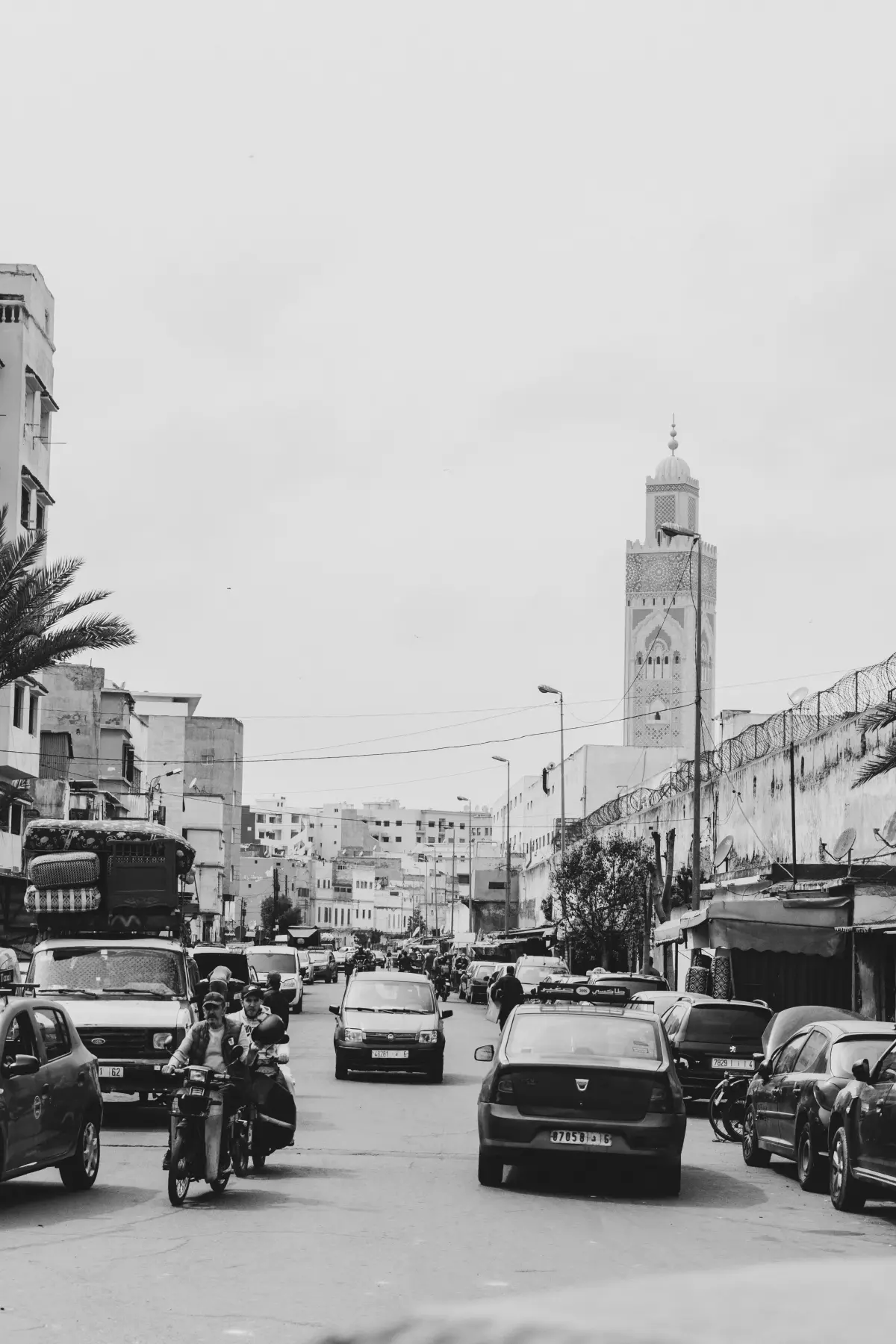

Casablanca Travel Guide: What to Skip and What to See
Casablanca is the economic engine of Morocco. It is loud, sprawling, and aggressively modern compared to the ancient imperial cities like Fes or Marrakech. Many tourists land at the airport and immediately take a train out of the city.
However, skipping “Casa” entirely means missing out on some of the most spectacular 20th-century architecture in North Africa, and more importantly, missing the Hassan II Mosque—the undisputed architectural crown jewel of modern Morocco.
Quick Overview: Casablanca Travel Basics
- Best for: Monumental architecture, coastal dining, and Art Deco history.
- Recommended stay: 1 to 2 days (It is a great first or last stop on an itinerary).
- Best time to visit: Spring (April–May) or Autumn. Summers are humid along the coast.
- Currency: Moroccan Dirham (MAD).
Top Places to Visit in Casablanca
If you only have 24 hours in the city, this is exactly where you should spend your time. For a full list of attractions with prices and opening hours, see our things to do in Casablanca guide.
The Hassan II Mosque
- What it is & Why visit: This is the primary reason to visit Casablanca. It is one of the largest mosques in the world, with a towering 210-meter minaret. Built partially over the Atlantic Ocean, the scale and the intricate zellij tilework are absolutely mind-blowing. Crucially, it is one of the only mosques in Morocco that non-Muslims are legally allowed to enter.
- Price: 130 MAD (~$13 USD) for the mandatory guided tour.
- Opening hours: Guided tours for non-Muslims run at specific times (usually 9 AM, 10 AM, 11 AM, and 2 PM). Check ahead as times change on Fridays and during Ramadan.
- How long to spend: 1.5 hours.
- Insider Tip: Bring socks. You must remove your shoes to enter the prayer hall, and the marble floors can be very cold in the winter months.
Quartier Habous (The New Medina)
- What it is & Why visit: Built by the French in the 1930s to solve a housing crisis, the Habous is a highly successful blend of traditional Moroccan medina layouts with French urban planning. It is much cleaner and less chaotic than the old medina.
- Price: Free to explore.
- Opening hours: 9:00 AM – 6:00 PM.
- How long to spend: 2 hours.
- Insider Tip: Do not miss the Mahkama du Pacha inside the Habous. It is a stunning administrative building with cedar ceilings and mosaic courtyards that rival the palaces in Marrakech. Getting in can be tricky—you usually need a guide, or you can ask the guard politely (and offer a small tip) to let you peek inside.
La Corniche (Ain Diab)
- What it is & Why visit: The oceanfront promenade lined with palm trees, luxury beach clubs, and cafes. It is where wealthy Casaouis come to see and be seen on the weekends.
- Price: Free to walk.
- Opening hours: 24/7 (Best at sunset).
- How long to spend: 1-2 hours.
- Insider Tip: Walk down to the Phare el-Hank (the historic lighthouse built in 1919) for a great photo op of the ocean crashing against the rocky promontory.
Rick’s Café
- What it is & Why visit: A restaurant designed to perfectly recreate the piano bar from the classic 1942 Humphrey Bogart film Casablanca (which was actually filmed entirely on a Hollywood soundstage, not in Morocco).
- Price: High-end (Expect to pay 300-500 MAD for dinner).
- Opening hours: 12:00 PM – 3:00 PM, 6:30 PM – 1:00 AM.
- How long to spend: 2 hours for dinner.
- Insider Tip: You absolutely must make a reservation weeks in advance. There is a strict dress code (no shorts or flip-flops), and security will turn you away at the door if you do not comply.
Practical Information for Your Visit
Getting Around
Casablanca is massive. Do not try to walk between the major districts.
- Petit Taxis (Red Taxis): These are everywhere. Always insist the driver turns on the meter (“Khdem l’compteur, 3afak”). If they refuse, get out and find another one.
- The Tramway: Casablanca has a clean, modern, and cheap tram system that is excellent for getting from the city center to the coastal Ain Diab area. A ticket costs just 8 MAD.
Is Casablanca Safe?
Yes, with standard urban precautions. Casablanca is a large modern city, not a particularly dangerous one.
- Keep your phone out of sight near busy roads — snatch-and-grab theft from motorcycles does happen.
- Use licensed red petit taxis rather than informal drivers. Always insist the meter is running.
- Be aware of your surroundings in the Old Medina at night.
- The Corniche and tourist areas are generally safe and well-frequented.
Frequently Asked Questions
Is Casablanca worth visiting? Yes, primarily to see the Hassan II Mosque, which is an unparalleled architectural achievement. However, 1 to 2 days is more than enough time before moving on to more traditional cities like Fes or Marrakech.
Do they speak English in Casablanca? French is the dominant business language here. English is becoming more common among the youth and in high-end hotels, but knowing basic French will make your life much easier.
Can non-Muslims enter the Hassan II Mosque? Yes. It is one of the very few religious sites in Morocco open to non-Muslims. You must buy a ticket for a guided tour outside prayer times, and you must dress modestly (shoulders and knees covered).
Casablanca is the perfect place to start your Moroccan adventure. Touch down, see the mosque, eat some seafood on the Corniche, and then catch the high-speed Al-Boraq train to your next destination.
For a step-by-step sightseeing route, see our 1-day Casablanca itinerary. For a full breakdown of what to see, read our things to do in Casablanca guide.