
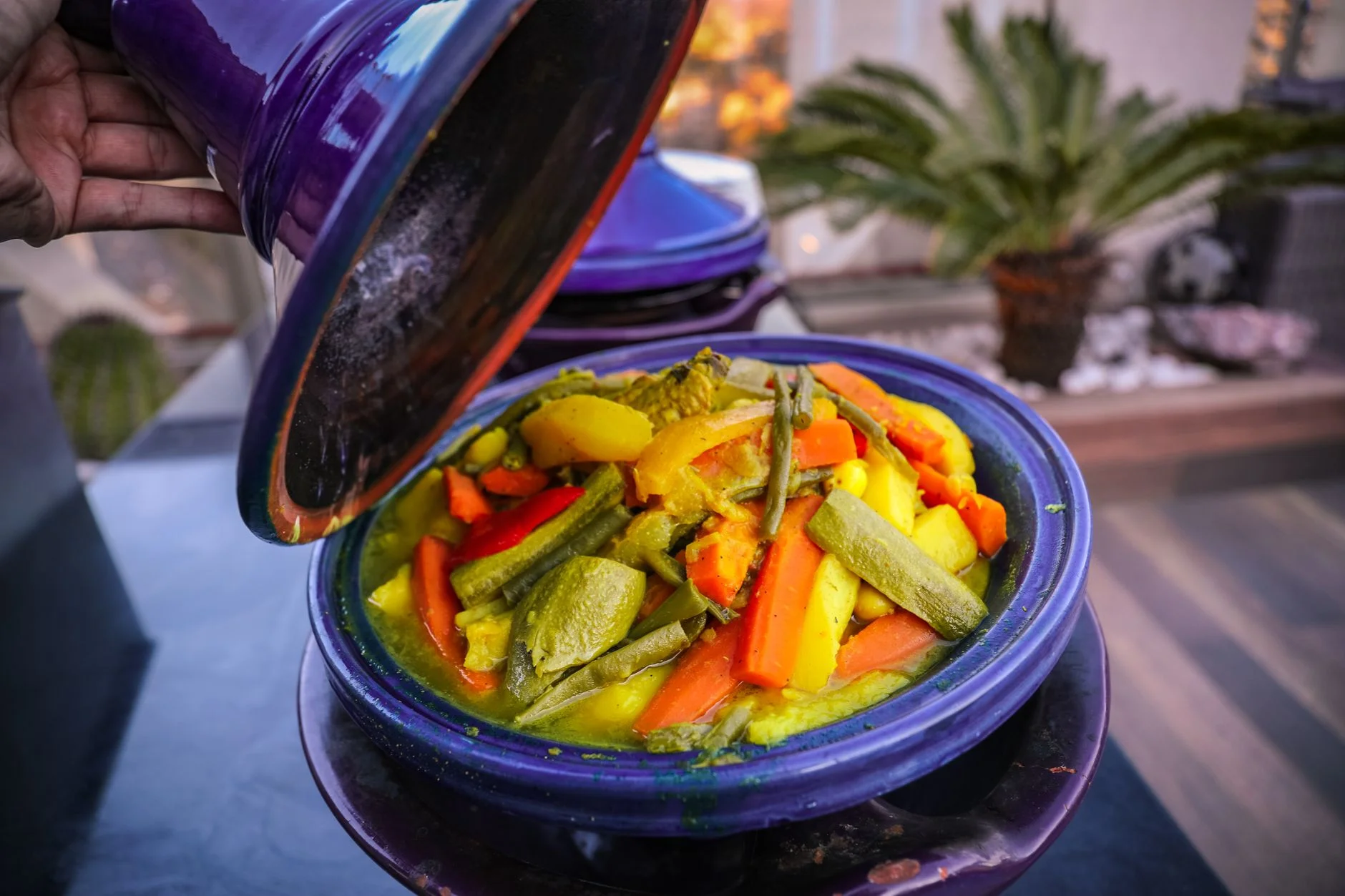
Moroccan food is much more than tagine and couscous.
Travel around the country and you will encounter slow-cooked meat dishes, steaming bowls of soup, layered breads cooked on hot griddles, simple bean dishes, elaborate pastries, grilled street food, and regional specialties that may barely appear on restaurant menus in another city.
Some foods are connected to particular places. Others are associated with Friday lunch, Ramadan, celebrations, or breakfast. And many of the best things to try are surprisingly simple.
If this is your first trip to Morocco, this guide covers the traditional Moroccan foods worth knowing, what they taste like, and when or where you are most likely to encounter them.
Moroccan Food at a Glance
If you only have time to try a few dishes, start with these:
| Dish | What it is | Look for it when |
|---|---|---|
| Tagine | Slow-cooked meat, vegetables or both | Lunch or dinner |
| Couscous | Steamed semolina served with vegetables and often meat | Especially Friday lunch |
| Pastilla | Sweet-savory filled pastry | Fes and traditional restaurants |
| Rfissa | Chicken, lentils and shredded flatbread | Traditional Moroccan cooking |
| Tanjia | Slow-cooked meat associated with Marrakech | Marrakech |
| Harira | Tomato-based soup with legumes | Especially during Ramadan |
| Bissara | Thick fava bean or split-pea soup | Breakfast and simple local eateries |
| Msemen | Layered griddled flatbread | Breakfast |
| Maakouda | Fried potato cakes | Snack/street food |
| Sfenj | Moroccan fried doughnut | Breakfast or snack |
But Moroccan food makes more sense once you understand how these dishes fit into everyday meals.
Essential Moroccan Dishes to Try
1. Tagine
Tagine is probably the dish most closely associated with Moroccan cuisine.
The name refers both to the traditional conical cooking vessel and to the food prepared inside it. Meat, poultry, fish or vegetables are slowly cooked with spices and other ingredients until tender.
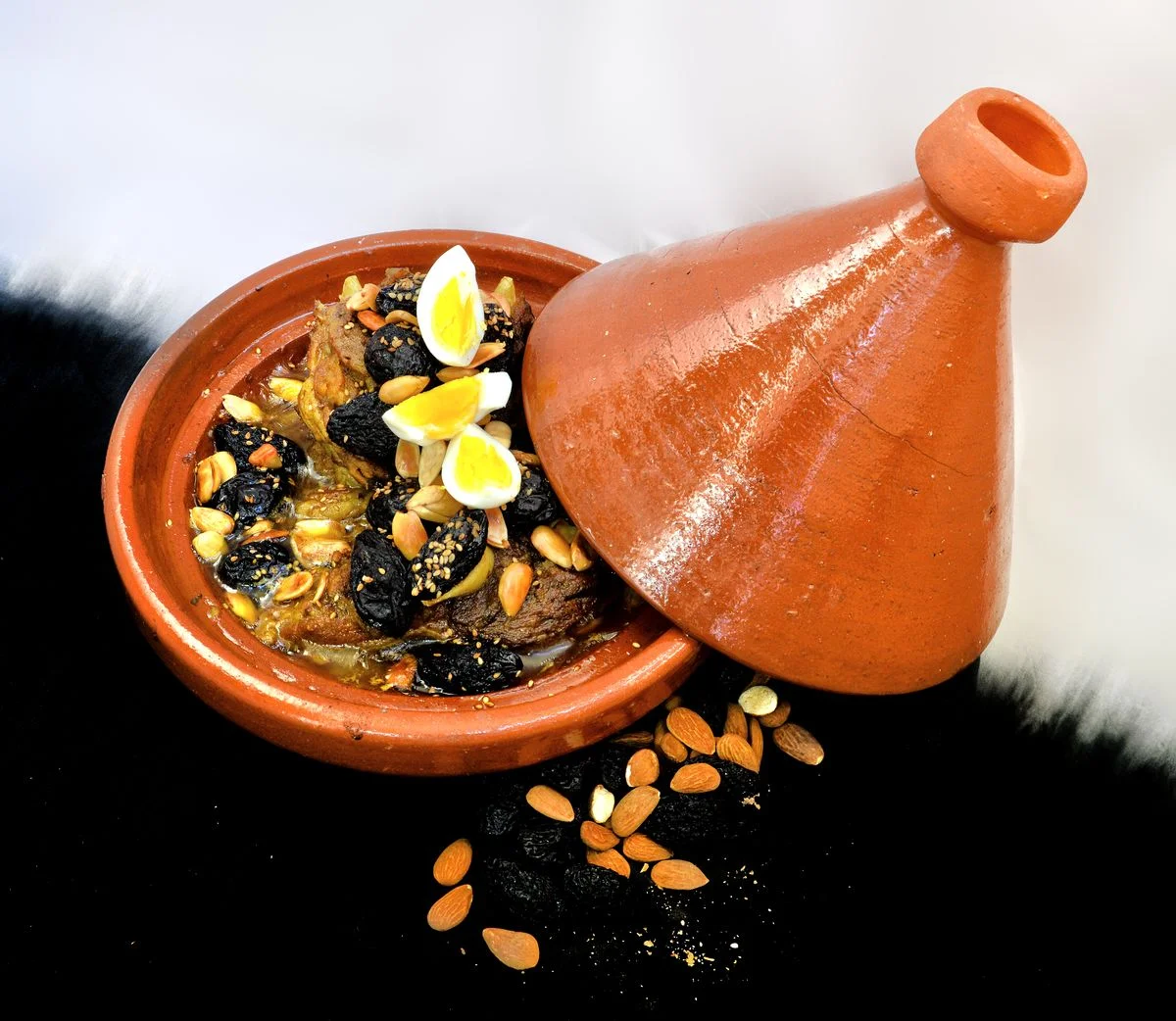
There is no single Moroccan tagine. Common versions include chicken with preserved lemon and olives, lamb or beef with prunes, kefta with tomato sauce and eggs, and vegetable tagines. The combinations also change between regions and restaurants.
How is tagine eaten? Moroccan bread, or khobz, is often served alongside the dish and used to pick up vegetables, meat and sauce. In more traditional shared meals, diners may eat directly from the same tagine. In restaurants, utensils are also completely normal.
One useful thing to remember when ordering: traditional tagines are slow-cooked. A restaurant may have dishes already cooking or partially prepared rather than beginning the entire process only after you order.
2. Couscous
Couscous is not simply a side dish in Morocco.
The tiny grains of semolina are traditionally steamed and served beneath vegetables, broth and often meat. One of the best-known versions combines couscous with a variety of vegetables such as carrots, zucchini, pumpkin and cabbage.
Why is couscous associated with Friday? Friday couscous is a longstanding Moroccan tradition. For many families, it is the main family meal following Friday prayers, although that certainly does not mean Moroccans eat couscous only on Fridays.
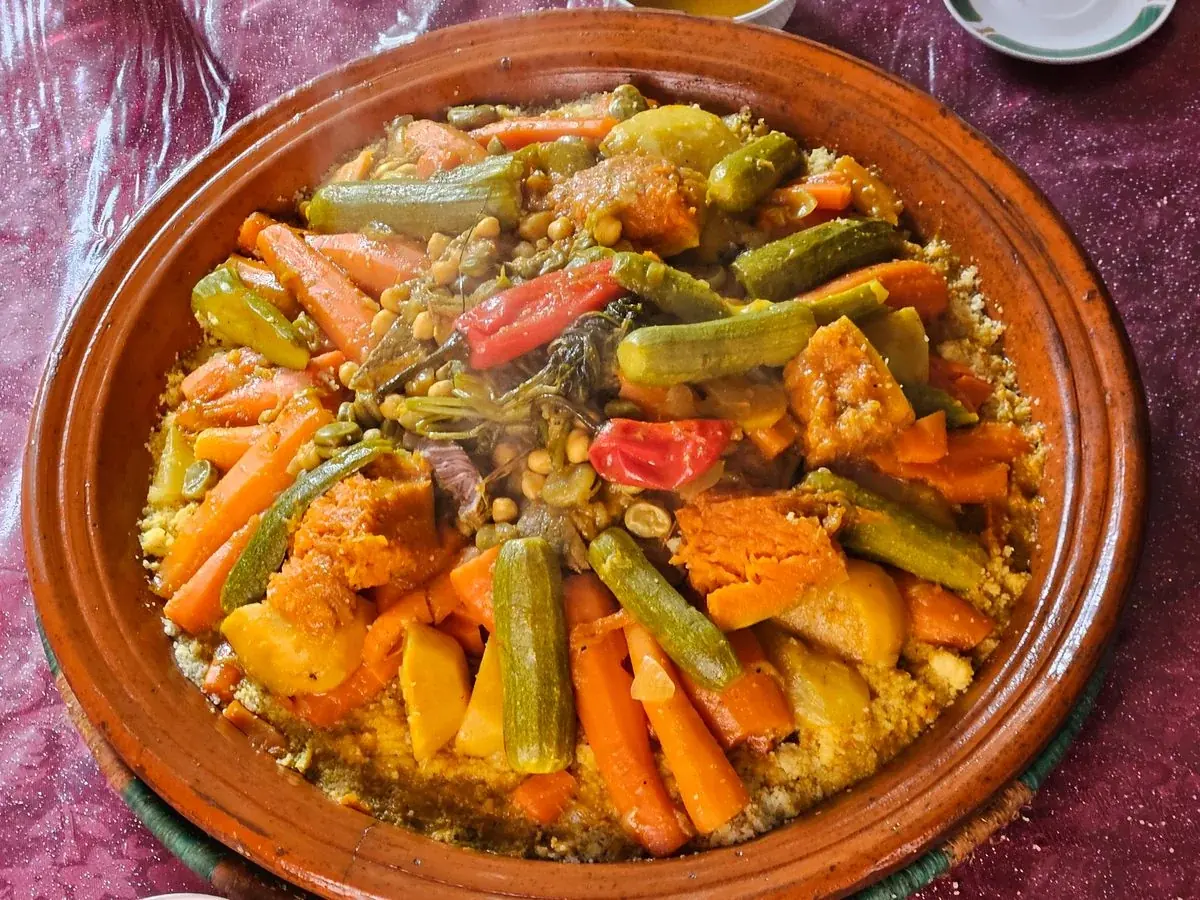
As a traveler, you will find it on restaurant menus throughout the week. But if you have the opportunity to experience a traditional Friday couscous meal, it provides more cultural context than treating the dish as another restaurant order.
3. Rfissa
Rfissa deserves far more attention from travelers than it usually gets.
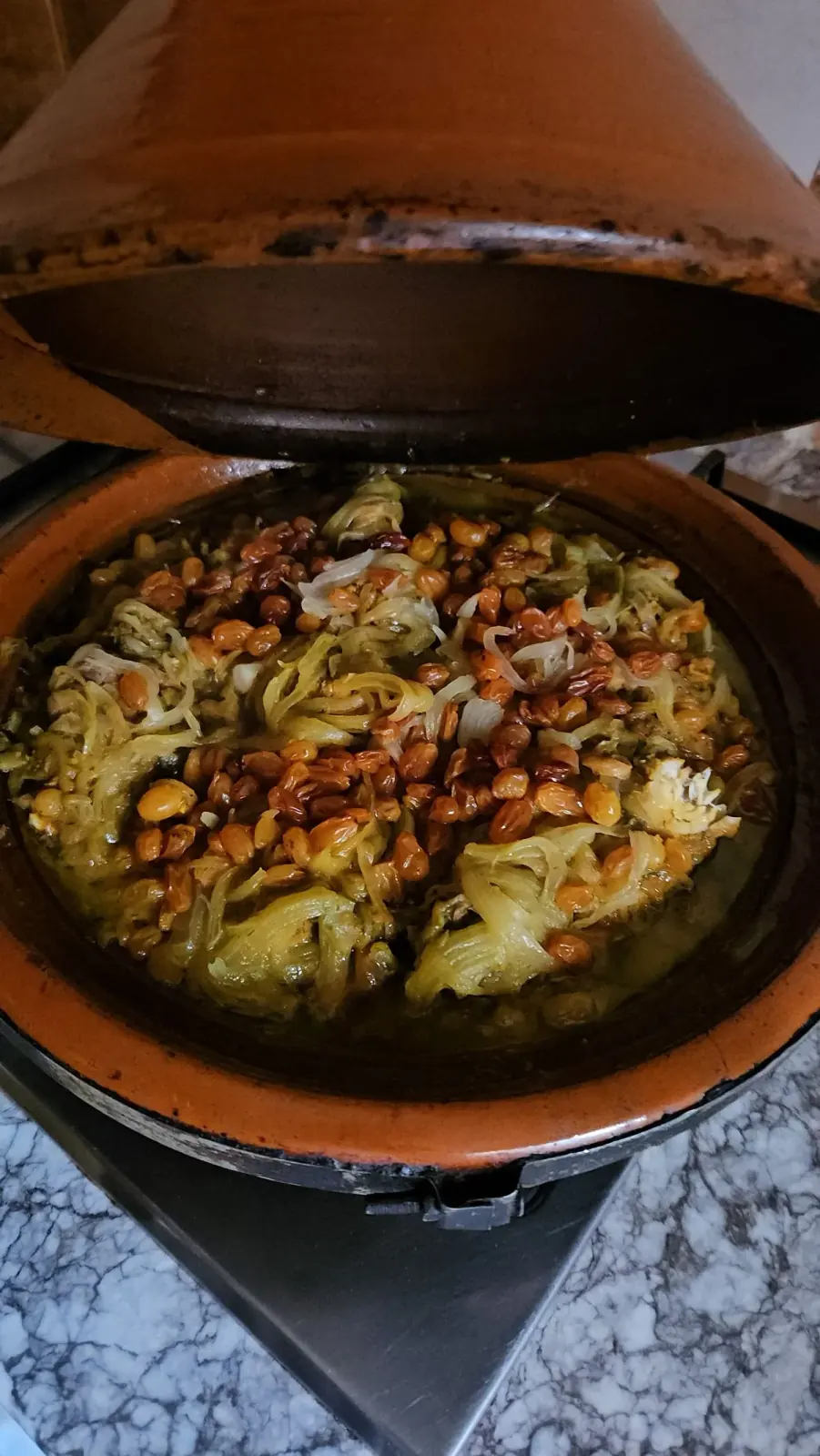
The dish combines chicken, lentils, onions and a richly spiced broth served over shredded pieces of thin flatbread, often msemen or a related bread preparation. Fenugreek is traditionally an important part of its distinctive flavor.
Unlike tagine and couscous, rfissa may not appear on every tourist restaurant menu. That makes it one of the dishes worth looking for if you want to move beyond Morocco’s most internationally famous foods.
4. Pastilla
Pastilla — also spelled bastilla or b’stilla — is one of Morocco’s most distinctive combinations of sweet and savory flavors.
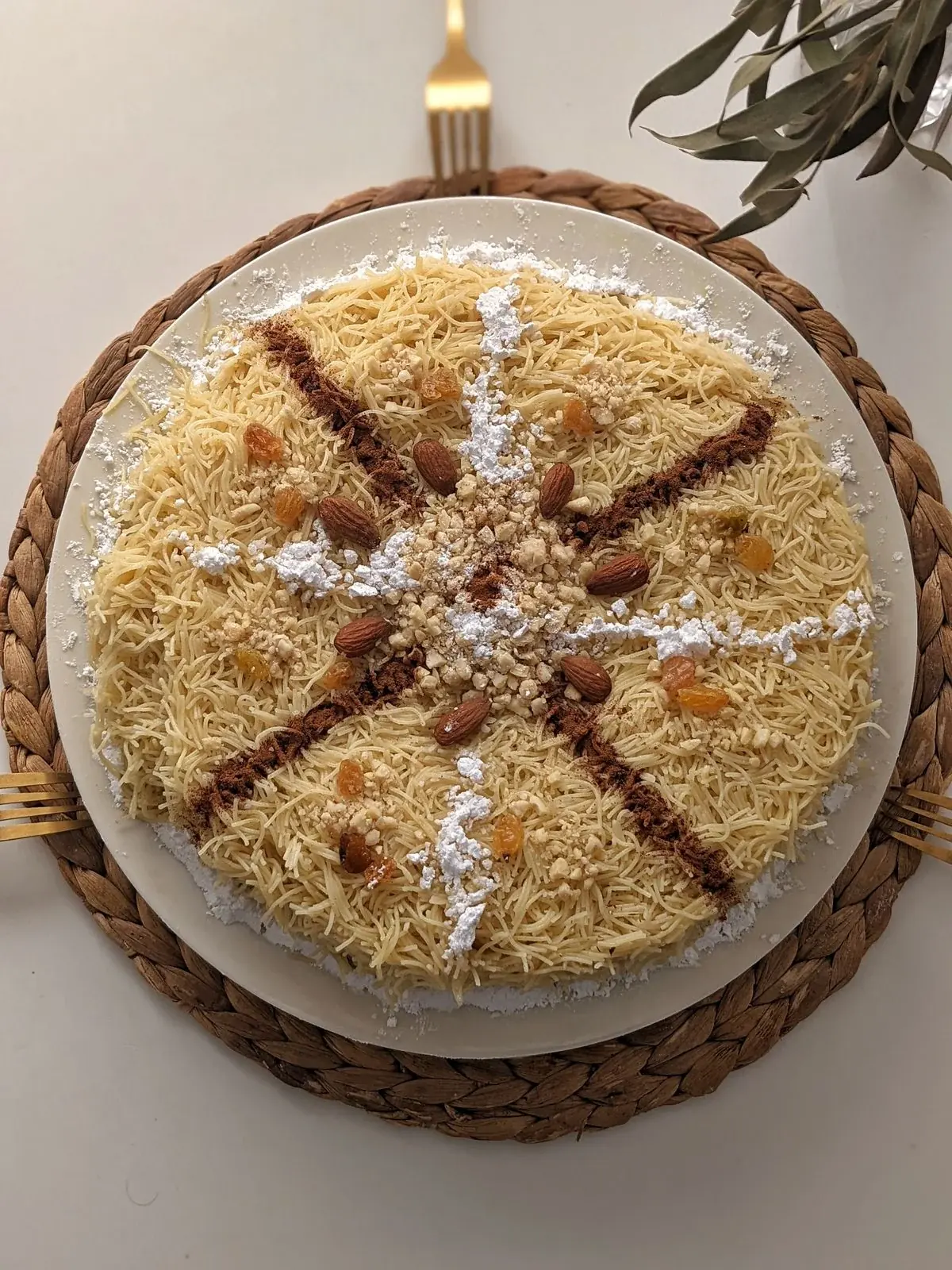
A thin, crisp pastry encloses a seasoned filling, traditionally associated with poultry in classic versions, while powdered sugar and cinnamon may be added on top. Chicken versions are common today, while seafood pastilla is another popular variation.
The contrast can be surprising the first time you try it: crisp pastry, savory filling, spices and sweetness all in the same dish. Pastilla has particularly strong associations with Fes and Fassi cuisine, although you will find it elsewhere in Morocco as well.
5. Tanjia
Do not confuse tanjia with tagine.
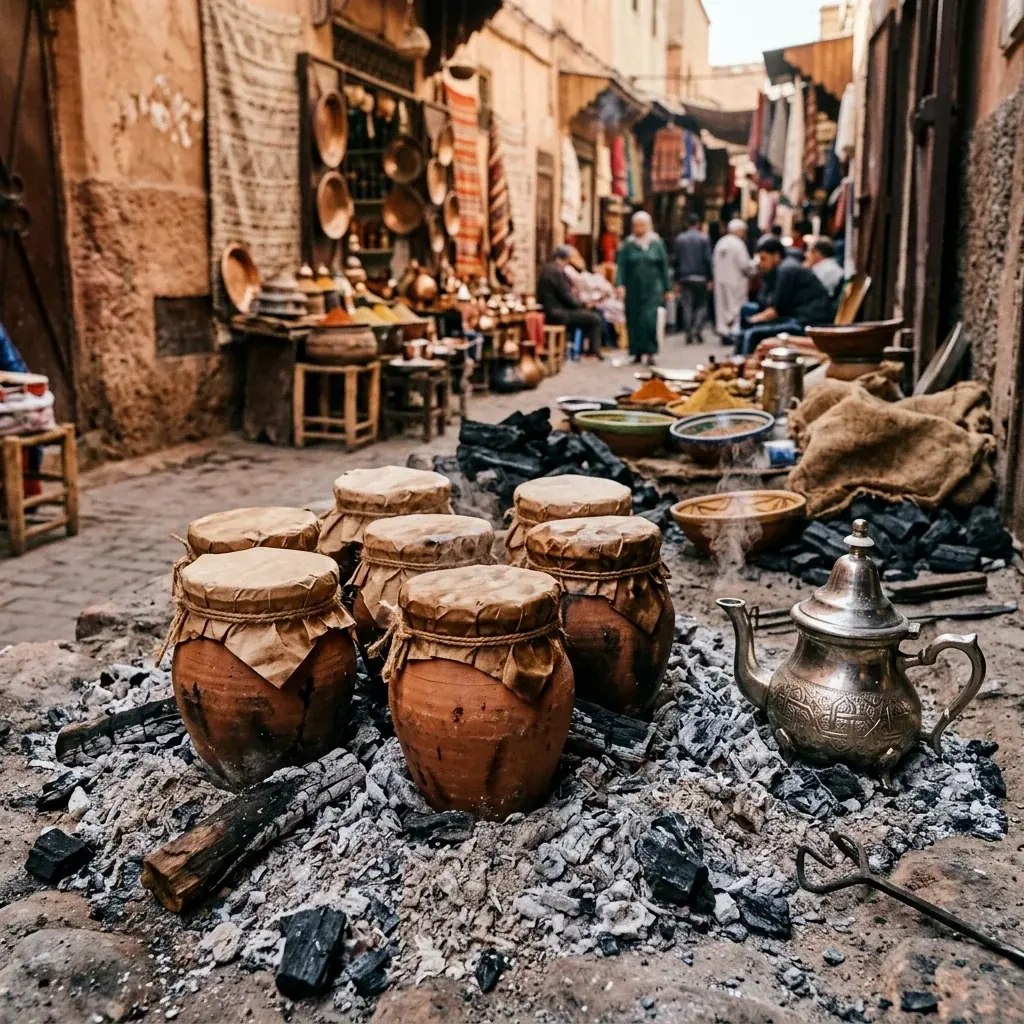
Tanjia is especially associated with Marrakech and takes its name from the earthenware vessel traditionally used to prepare it. Meat is slowly cooked with a relatively simple mixture of seasonings and preserved ingredients until extremely tender.
If Marrakech is part of your itinerary, tanjia is one of the regional dishes worth seeking out rather than eating another generic tagine.
Moroccan Soups
6. Harira
Harira is a filling Moroccan soup commonly made with tomatoes, lentils, chickpeas, herbs and spices, sometimes with meat.
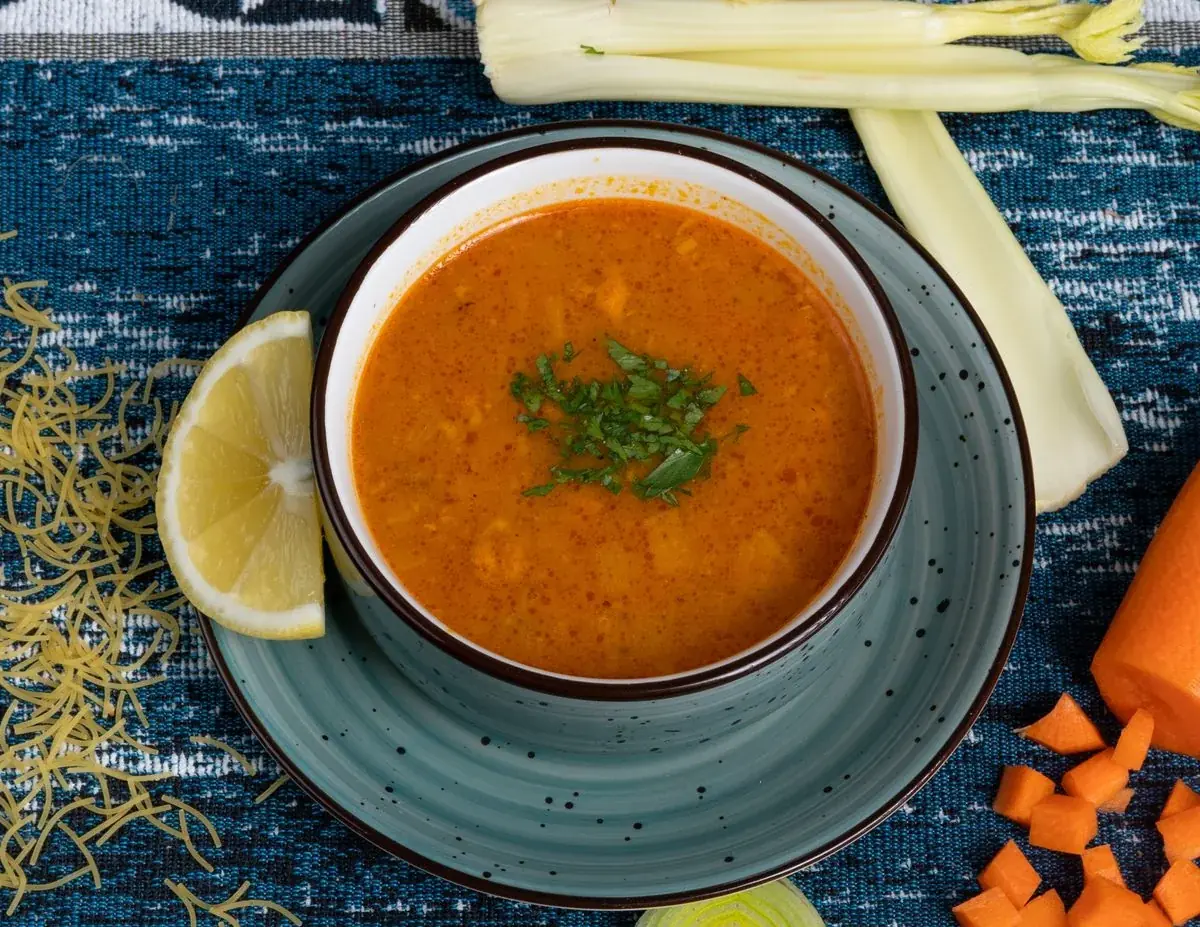
You can encounter it throughout the year, but it has a particularly important place during Ramadan, when it is traditionally served as part of the meal that breaks the daily fast. It is often accompanied by dates and Moroccan sweets such as chebakia during Ramadan.
For travelers, harira also makes an inexpensive and satisfying light meal.
7. Bissara
Bissara shows how good Moroccan food does not have to be complicated.
It is a thick soup or purée made from dried fava beans or split peas, typically served warm with olive oil, cumin and sometimes paprika or chili. You are more likely to encounter it in simple cafés and local eateries than in upscale restaurants.
It is particularly welcome on a cool morning in northern Morocco.
Moroccan Breakfast Foods
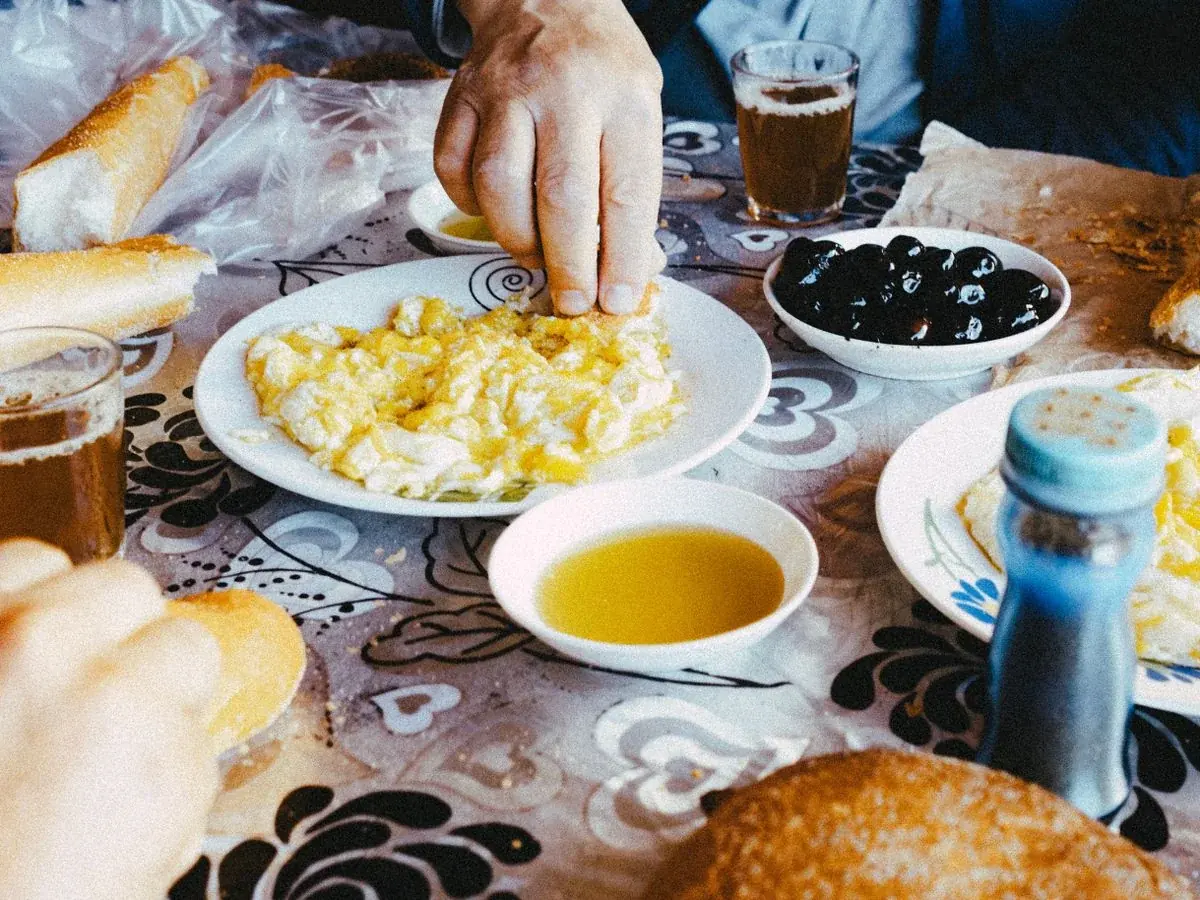
A Moroccan breakfast can be one of the easiest ways to discover foods you might otherwise miss. Depending on the accommodation or café, breakfast may include bread, olive oil, honey, cheese, eggs and several different griddled breads or pancakes.
8. Msemen
Msemen is a layered Moroccan flatbread folded into a square and cooked on a griddle.
The outside develops a lightly crisp surface while the layers remain soft and chewy. It can be eaten plain or with honey, butter, cheese or other accompaniments. Fresh msemen with tea is a simple breakfast worth trying at least once.
9. Baghrir
Baghrir looks different from a typical pancake.
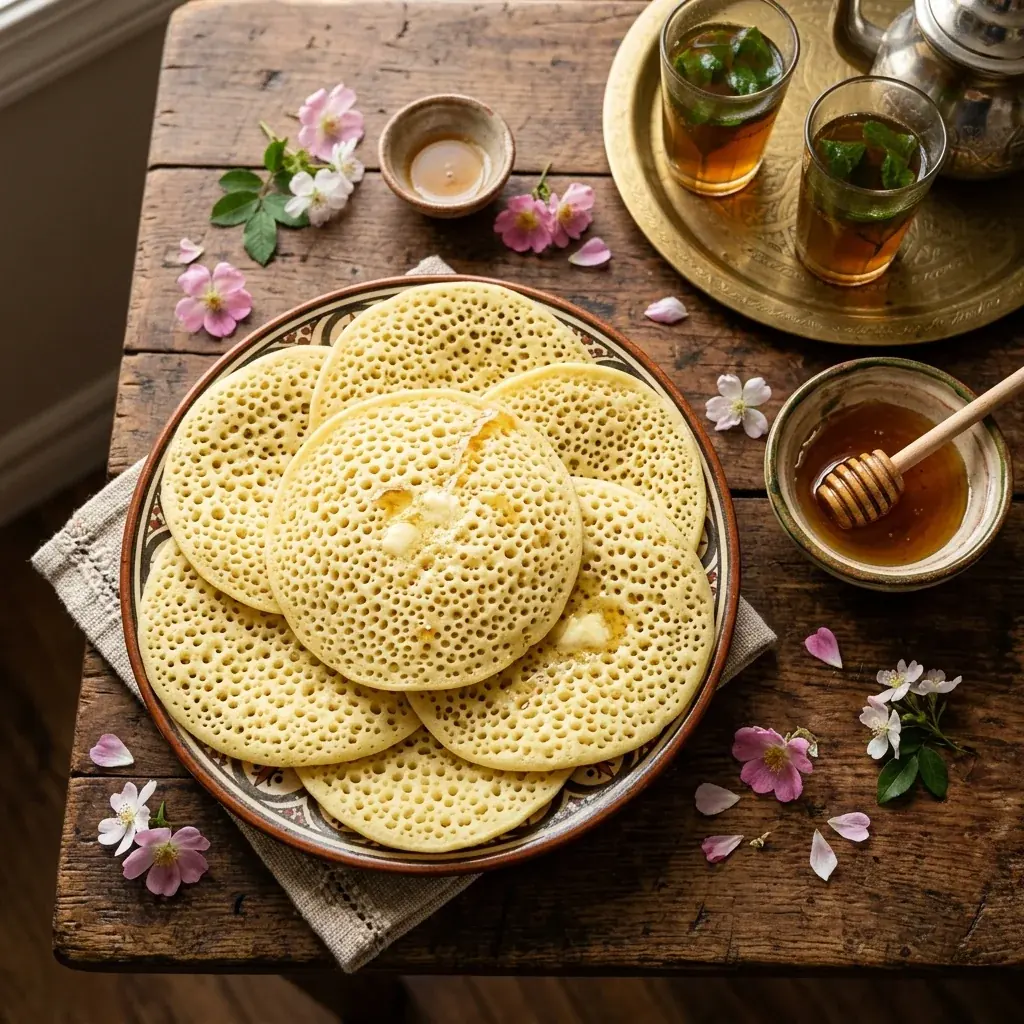
Its surface develops dozens of tiny holes while cooking, which is why it is sometimes called the “thousand-hole pancake.” It is soft and spongy, making it particularly good at absorbing melted butter, honey or other toppings. You will often encounter it at breakfast or with tea.
10. Sfenj
Sfenj is Morocco’s answer to fried dough.
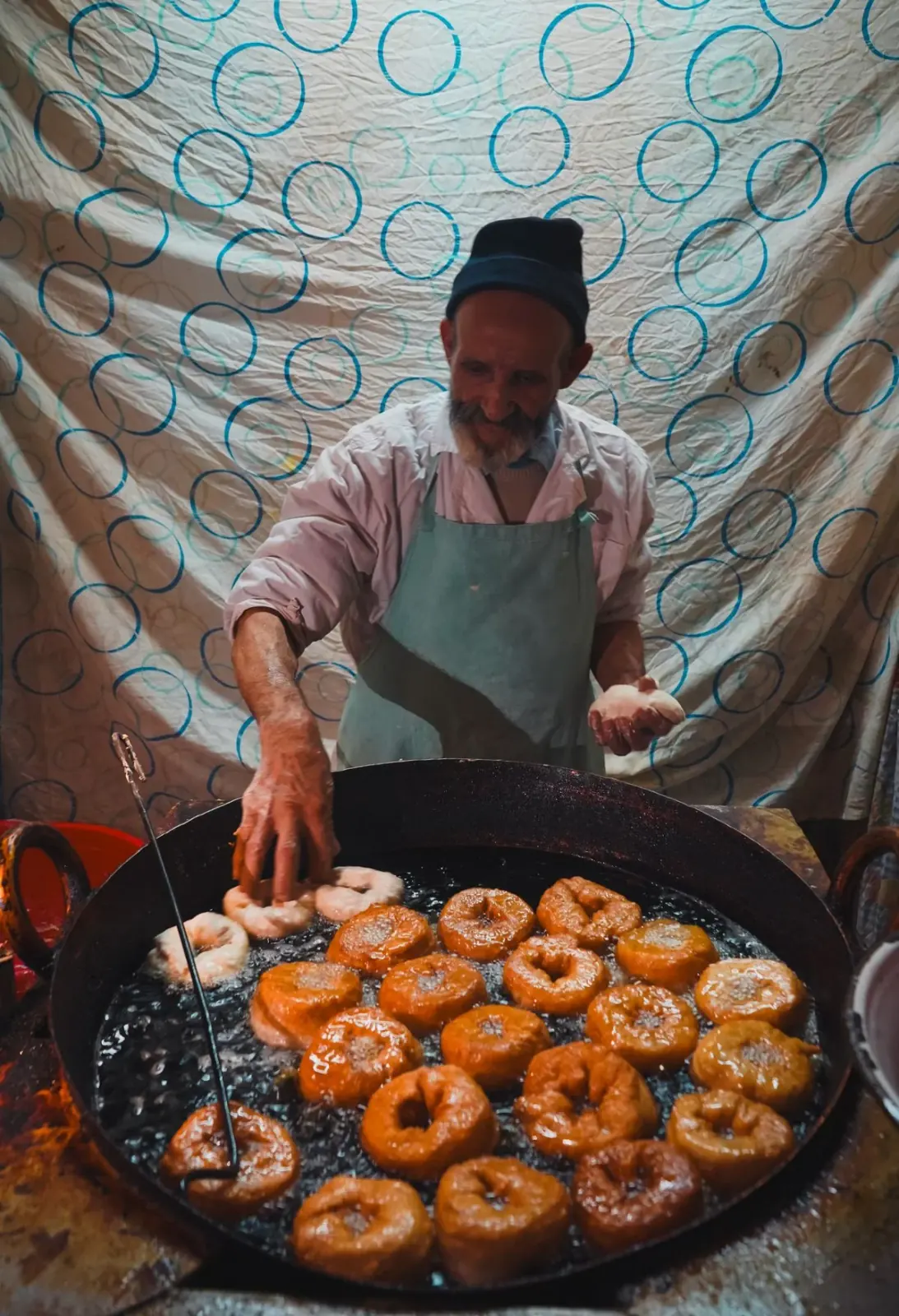
The dough is shaped into rings and fried until golden, producing something airy and chewy rather than cake-like. It is commonly eaten while fresh, either plain or with sugar depending on preference.
Look for sfenj vendors in the morning when batches are being fried.
Moroccan Street Food & Snacks
Street food varies considerably between cities, which makes it particularly interesting when traveling around Morocco.
11. Maakouda
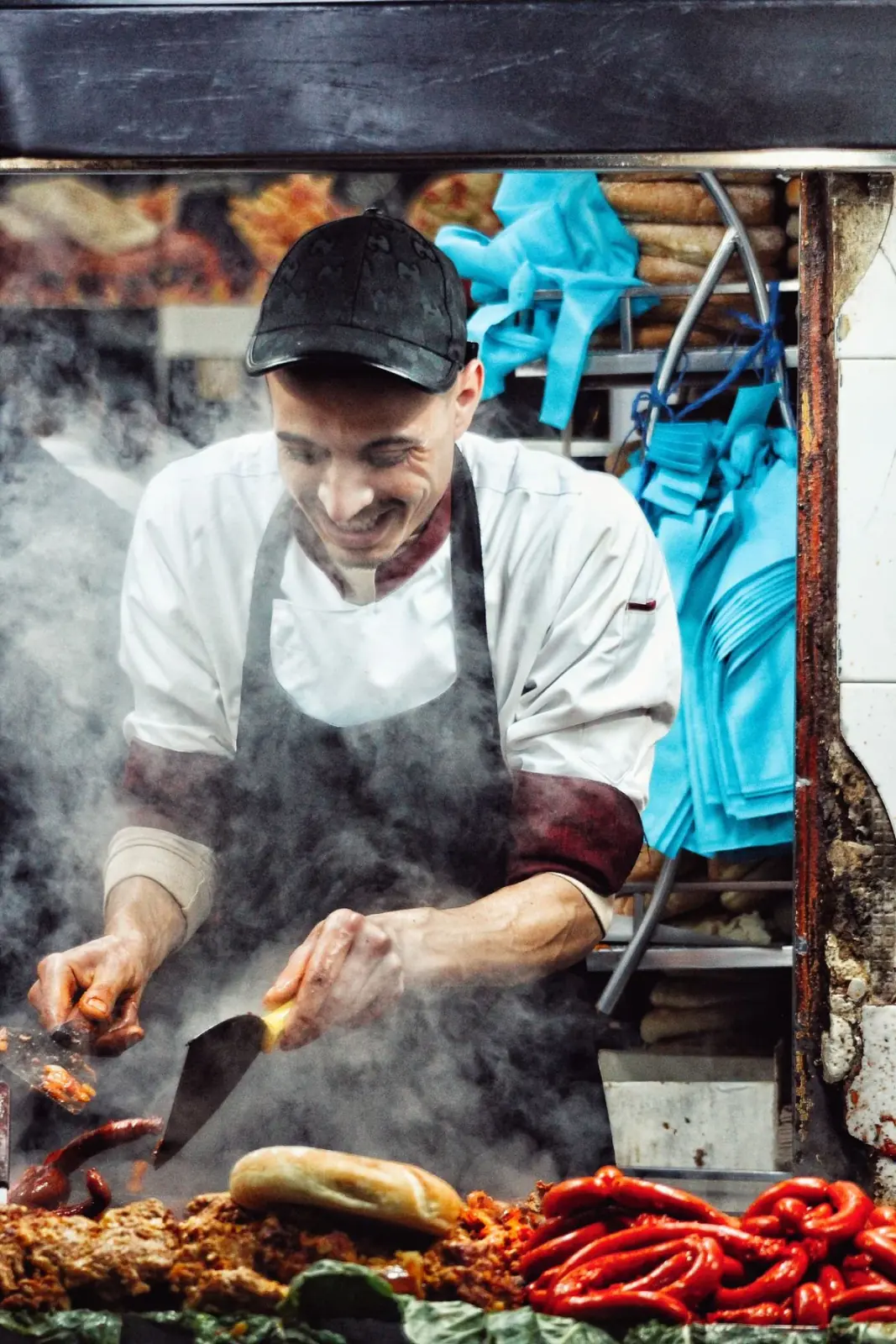
Maakouda are fried potato cakes seasoned and cooked until crisp on the outside.
They can be eaten alone or tucked into bread with sauces and other fillings to make a simple sandwich. They are inexpensive, filling and much closer to everyday snack food than an elaborate restaurant meal.
12. Grilled Meat
Follow the smoke around busy food areas and you will often find skewers of meat cooking over charcoal.
Kefta — seasoned minced meat — is especially common, alongside different cuts of beef, lamb or chicken. Grilled meat is often served simply with bread, seasoning and accompaniments rather than elaborate presentation.
13. Snail Soup
Snails are one of the more distinctive street foods visitors encounter, particularly in places such as Marrakech.
They are served in a seasoned broth and eaten from a small bowl. It will not appeal to everyone, but for travelers deliberately exploring Moroccan street food, it is one of the more recognizable options.
Moroccan Salads and Sides
Ordering “salad” in Morocco does not necessarily mean a bowl of lettuce. A Moroccan meal can begin with several small cooked and raw vegetable dishes served together.
14. Zaalouk
Zaalouk is made primarily from cooked eggplant and tomato seasoned with herbs and spices.
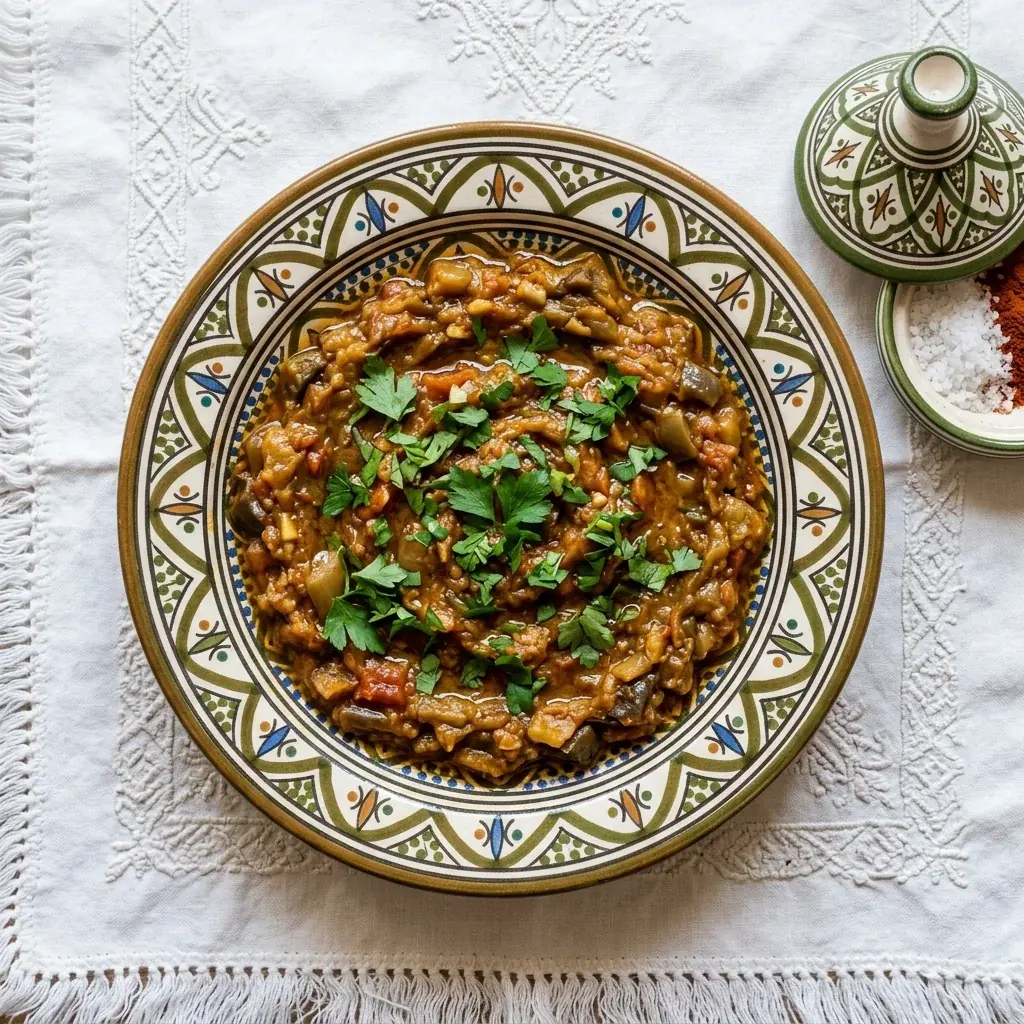
The texture can range from chunky to almost puréed. It is usually eaten with bread and works as a starter or accompaniment to a larger meal.
15. Taktouka
Taktouka combines cooked peppers and tomatoes with seasoning.
Like zaalouk, it is typically eaten with Moroccan bread. If a restaurant offers a selection of Moroccan salads, you may receive several small dishes rather than one large salad.
Bread: The Part of Moroccan Food You Shouldn’t Ignore
16. Khobz
Bread is central to many Moroccan meals.
The common round Moroccan loaf known as khobz is served alongside tagines, salads, grilled meats and other dishes. Bread may also function as the utensil. Small pieces are used to pick up food or soak up sauce from a shared dish.
That explains why a basket of bread arriving at your table is not simply an optional side.
Moroccan Sweets
Moroccan pastries frequently combine nuts, honey, sesame, orange blossom water and spices. They can be very sweet, which also explains why they pair so naturally with unsweetened or lightly sweetened drinks — although Moroccan mint tea itself is traditionally often served quite sweet.
17. Chebakia
Chebakia is a flower-shaped fried pastry coated in honey and sesame seeds.
It has a particularly strong association with Ramadan, when it is commonly served alongside harira during the evening meal. You can still encounter it outside Ramadan, particularly in pastry shops and markets.
18. Kaab el Ghazal
Kaab el ghazal, commonly translated as gazelle horns, are crescent-shaped pastries filled with almond paste and scented traditionally with orange blossom water.
They are more delicate than many syrup-heavy Moroccan sweets and are closely associated with traditional pastry-making.
19. Sellou
Sellou is very different from a conventional pastry.
It is a rich mixture traditionally made from roasted flour, sesame seeds, almonds and spices, combined into a crumbly, dense preparation. It is particularly associated with Ramadan and special occasions.
Moroccan Mint Tea
20. Atay
Moroccan mint tea — atay — is as much about hospitality as it is about thirst.
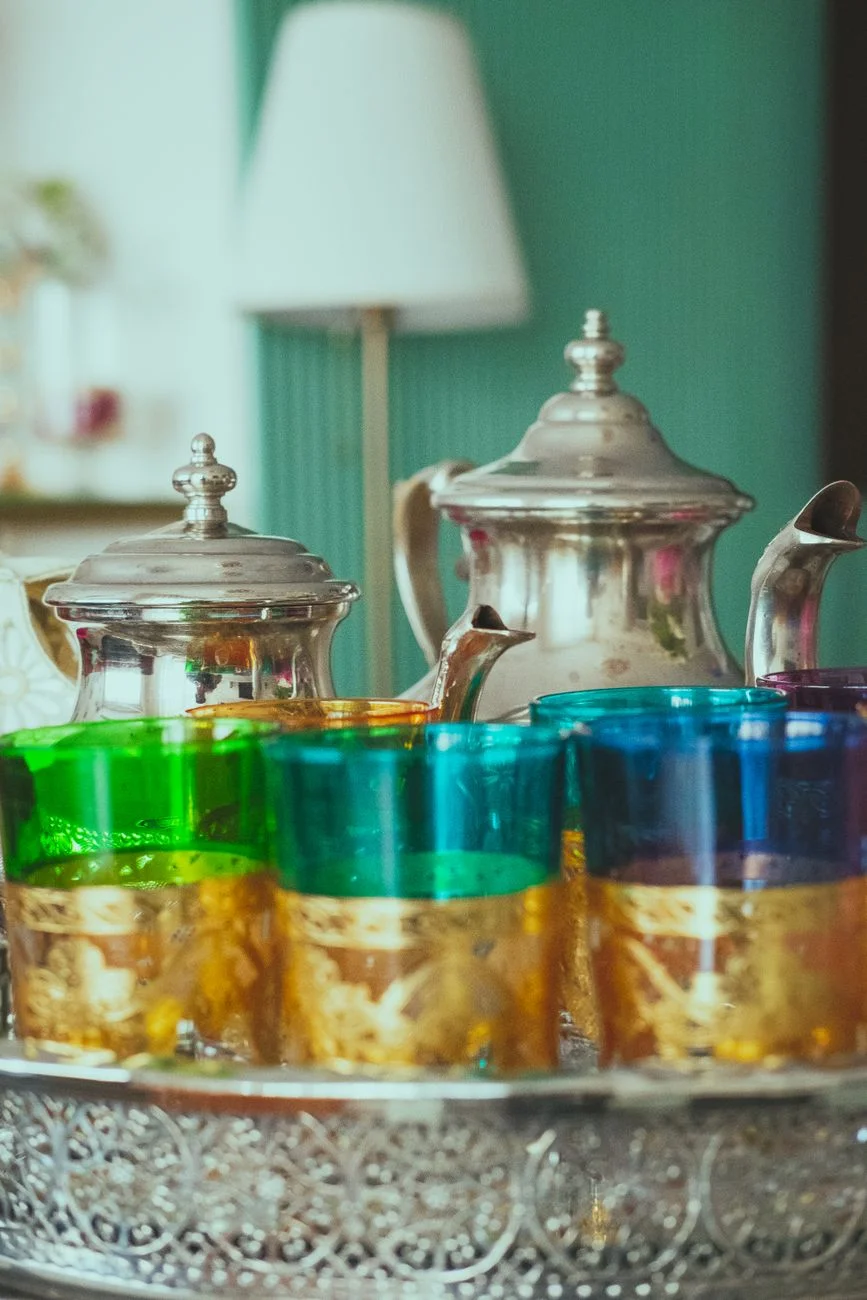
It typically combines green tea, fresh mint and sugar, although preparation varies. Tea may be served after meals, during shopping, when visiting someone’s home or simply as part of sitting in a café.
You will often see it poured from above the glass, helping create the characteristic foam at the top. If someone offers you tea, accepting can be a pleasant part of the interaction, but there is no need to force yourself to drink something you do not want. A polite refusal is fine.
What to Eat Where in Morocco
One useful way to approach Moroccan food is not to order the same dishes in every city. Different places have their own specialties and food traditions.
Marrakech
Look for tanjia, alongside the city’s extensive street-food culture and traditional Moroccan dishes.
Fes
Fes has a particularly strong culinary reputation, and pastilla is one of the dishes closely associated with Fassi cuisine.
Chefchaouen and Northern Morocco
Simple mountain and northern foods such as bissara are worth looking for, alongside regional dairy products and other northern specialties.
Coastal Morocco
Cities along the Atlantic and Mediterranean coasts naturally provide more opportunities to eat fish and seafood. The preparation varies by destination, from grilled fish to fried seafood and fish-based tagines.
The point is not that you can only eat these foods in these places. It is that traveling through Morocco gives you an opportunity to let your food choices change with your route.
How Moroccan Meals Work
You do not need to memorize a long list of etiquette rules before eating in Morocco. A few basics are enough.
Eating With Bread
In traditional meals, bread can be used to pick up food from a shared dish. When eating communally, people often eat primarily from the portion directly in front of them rather than reaching across the entire plate.
Eating With Your Hand
Some Moroccan dishes are traditionally eaten using the right hand, particularly in informal or family settings. But restaurants frequently provide utensils, and nobody needs to turn dinner into an etiquette exam. Follow the people you are eating with and ask if you are unsure.
Shared Dishes
Tagines, couscous and other foods may be served communally. That is normal and part of the social character of many Moroccan meals.
Is Moroccan Food Spicy?
Moroccan food uses plenty of spices, but spiced does not automatically mean hot.
Cumin, ginger, turmeric, cinnamon, paprika, saffron and other seasonings can contribute layers of flavor without creating chili-level heat. Harissa and other hot sauces may be available separately. If you do not tolerate chili well, asking whether a particular dish is hot is still sensible.
Is Morocco Good for Vegetarians?
Vegetarian travelers can eat well in Morocco, but there is an important distinction between a dish containing vegetables and a dish being completely vegetarian.
Vegetable tagines, couscous, salads, lentils, beans, breads and breakfast foods provide plenty of possibilities. However, broths or preparations can sometimes contain meat even when the visible ingredients are mostly vegetables. If avoiding meat completely is important to you, confirm rather than assuming.
How to Approach Street Food in Morocco
Street food can be one of the most interesting parts of eating your way through Morocco, but there is no magic rule that identifies a safe stall.
Use the same practical judgment you would elsewhere. Look for food being cooked fresh and served hot, observe basic cleanliness, and consider stalls with steady turnover rather than food that appears to have been sitting for a long period.
If you have allergies or a medical dietary restriction, street food can be harder because ingredients and cross-contact may not always be easy to confirm.
Frequently Asked Questions
What is the most famous Moroccan food?
Tagine and couscous are probably the two Moroccan dishes most internationally recognized, but Moroccan cuisine includes a much wider range of soups, breads, pastries, grilled foods and regional specialties.
What food should I try on my first trip to Morocco?
Start with tagine and couscous, then add pastilla, rfissa, harira, msemen and at least one regional specialty from the places you visit.
What do Moroccans eat for breakfast?
Breakfast can include bread, olive oil, honey, cheese, eggs, msemen, baghrir and tea, although everyday breakfasts vary considerably between households.
Why do Moroccans eat couscous on Friday?
Friday couscous is a longstanding family and social tradition associated with the weekly Muslim day of communal prayer. Couscous is also eaten on other days.
Is Moroccan food hot and spicy?
Moroccan food is heavily seasoned but is not necessarily chili-hot. Many dishes rely on aromatic spices rather than intense heat.
What is the difference between tagine and tanjia?
Tagine refers to a broad family of slow-cooked dishes prepared in the well-known conical vessel. Tanjia is a different slow-cooked meat preparation particularly associated with Marrakech and traditionally cooked in its own distinctive earthenware vessel.
Is Moroccan food vegetarian-friendly?
It can be. Vegetable tagines, salads, legumes, breads and other dishes provide many options, but travelers who strictly avoid meat should confirm whether broth or other animal ingredients are used.
Final Thoughts
The biggest mistake you can make with Moroccan food is eating the same chicken tagine every night simply because it is the first familiar dish on the menu.
Try the tagine — it deserves its reputation. But then move on.
Eat msemen for breakfast. Try bissara on a cool morning. Order rfissa when you find it. Look for tanjia in Marrakech and explore Fassi dishes in Fes. Stop for maakouda when you want something simple, and leave room for Moroccan pastries with tea.
Moroccan cuisine becomes much more interesting when you stop treating it as one national restaurant menu and start noticing how place, season, family traditions and occasion influence what people eat. That is when food becomes part of the journey rather than just something you order between sightseeing stops.
Planning your trip? Continue with our Marrakech Travel Guide and Fes Travel Guide to explore what to see — and what to eat — in each city.